Men’s Grooming Business in India: 2026 Trends & Opportunities
Men’s Grooming Business in India: 2026 Trends, Consumer Spending & New Opportunities
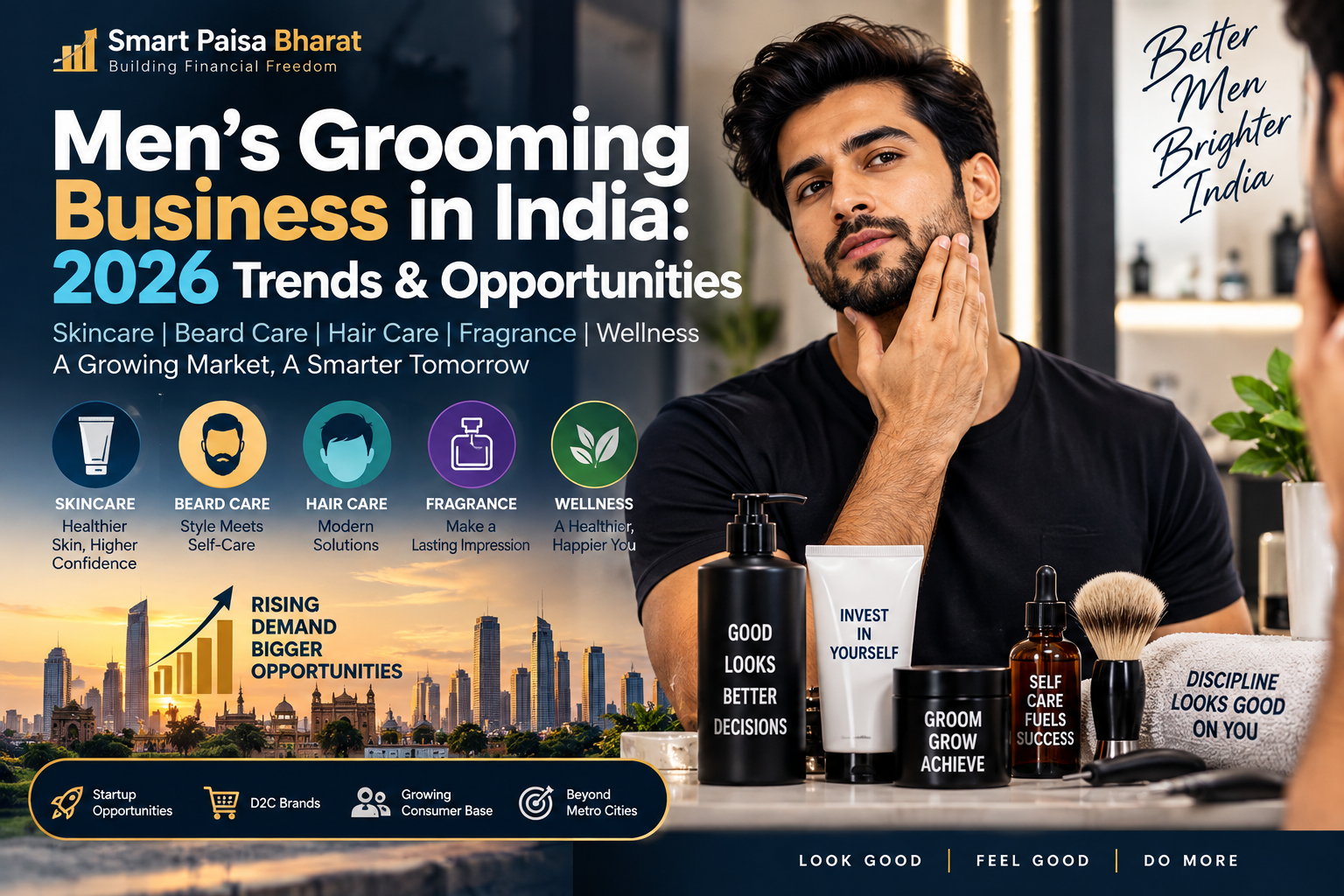
Men’s grooming in India is no longer limited to shaving cream, deodorant and a haircut. Today, grooming increasingly includes skincare, beard care, hair styling, fragrances, personal wellness and simple daily routines. As consumer habits evolve, the category is opening new possibilities for brands, retailers, creators and small businesses.
But there is an important difference between a growing category and an easy business. Customers are becoming more selective, online competition is intense, advertising claims are under greater scrutiny, and product quality matters more than flashy marketing.
This guide looks at the men’s grooming business in India from a practical perspective: what is changing, where consumers are spending, which business models are emerging, and what entrepreneurs should consider before investing money.
Table of Contents
- How Men’s Grooming Is Changing in India
- Key Consumer Trends in 2026
- Grooming Categories Getting Attention
- Why Digital Shopping Matters
- The Opportunity Beyond Major Cities
- Business Models Entrepreneurs Can Explore
- How to Think About Startup Costs
- Building a Grooming Brand Without Overpromising
- Common Mistakes New Grooming Businesses Make
- What Could Shape the Category Next
- Practical Checklist Before Starting
- Frequently Asked Questions
How Men’s Grooming Is Changing in India
A decade ago, many men’s grooming purchases were routine and functional. A customer might visit a barber, buy a familiar shaving product and occasionally purchase perfume or deodorant.
That behaviour is gradually becoming more varied. A modern grooming routine may include face cleanser, moisturiser, sunscreen, beard oil, styling products, fragrance and specialised hair-care products.
The biggest change is not simply the number of products available. It is the way consumers discover them.
Short-form videos, product reviews, search engines, online marketplaces, social media creators and brand websites have made product education part of the buying journey. Consumers can compare ingredients, prices, reviews and alternatives before placing an order.
The opportunity is moving from simply selling grooming products to helping customers make better grooming decisions.
Key Men’s Grooming Consumer Trends in 2026
1. Skincare Is Becoming Part of Everyday Grooming
Skincare is increasingly being treated as a routine rather than an occasional purchase. Cleansers, moisturisers, sunscreens and basic treatment-focused products have become easier for male consumers to discover and understand.
Brands that explain when and how a product should be used can build more trust than brands that simply use complicated ingredient names or aggressive marketing.
2. Beard Care Has Become a Distinct Category
Beards have created demand for products beyond the traditional razor. Beard oils, balms, washes, trimmers and styling products have given businesses several ways to serve different customer needs.
The opportunity is particularly interesting for brands that focus on a specific customer problem instead of launching dozens of unrelated products at once.
3. Personalisation Is Becoming More Important
Customers do not all have the same skin type, hair texture, beard growth pattern, lifestyle or budget.
This creates room for personalised product recommendations, quizzes, routine builders and educational content.
Personalisation does not always require expensive technology. Even a simple website questionnaire can help a customer understand which product category may be appropriate for their routine.
4. Ingredient Awareness Is Growing
Consumers are increasingly interested in what goes into personal-care products. Ingredients, formulation style, fragrance, skin compatibility and product purpose can influence purchase decisions.
This makes transparent product information increasingly valuable for brands.
5. Natural and Ayurvedic Positioning Needs Substance
Interest in traditional and plant-based ingredients remains relevant in India, but businesses should avoid treating words such as “natural”, “herbal” or “Ayurvedic” as automatic proof that a product is better for everyone.
Clear formulation information, appropriate testing, responsible communication and realistic expectations are more useful than exaggerated promises.
6. Value Still Matters
Premium grooming products may attract consumers looking for specialised experiences, but price remains important across a large and diverse Indian market.
A successful brand therefore needs to answer a simple question: What useful problem does this product solve at its price?
Grooming Categories Getting Attention
Entrepreneurs entering this market have several categories to consider. Each has different customer expectations, repeat-purchase behaviour and competitive pressure.
| Category | Typical Customer Need | Business Consideration |
|---|---|---|
| Face Care | Basic daily skincare | Education and product positioning matter |
| Beard Care | Maintenance and styling | Strong scope for niche branding |
| Hair Care | Cleaning, styling and maintenance | Highly competitive category |
| Fragrance | Personal expression and everyday use | Brand identity can be important |
| Shaving | Traditional grooming needs | Repeat purchases can support customer retention |
| Grooming Accessories | Trimming and routine convenience | Useful as complementary products |
Why Digital Shopping Matters for Men’s Grooming
Online shopping has changed how consumers discover personal-care products. A new brand can reach customers without immediately building a large physical retail network.
However, having an online store is not the same as having an online business.
A grooming website needs clear product photography, transparent pricing, easy navigation, useful descriptions, ingredient information where appropriate, customer-support options and straightforward delivery and return information.
Content Can Become a Competitive Advantage
Grooming is an education-heavy category. Customers often have questions before purchasing.
- How often should a product be used?
- Which product category is suitable for a particular routine?
- What is the difference between beard oil and beard balm?
- What does a particular ingredient do?
- How should a beginner build a simple routine?
- Which products are essential and which are optional?
A brand that answers these questions honestly can create useful search traffic while simultaneously helping customers understand its products.
The Opportunity Beyond Major Cities
India’s grooming market should not be viewed only through the lens of large metropolitan cities.
Internet access, digital payments, e-commerce delivery and social-media content have expanded product discovery across smaller cities and towns.
This creates an interesting opportunity for businesses that understand regional customer behaviour instead of assuming that every Indian consumer wants the same premium urban experience.
What Smaller-City Customers May Value
- Clear product benefits
- Reasonable pricing
- Reliable delivery
- Simple product instructions
- Trustworthy reviews
- Easy customer support
- Familiar and understandable communication
For entrepreneurs, this means a strong opportunity may come from solving a specific local customer problem rather than trying to copy a large metropolitan brand.
Business Models Entrepreneurs Can Explore
1. Private-Label Grooming Brand
A business can work with a suitable manufacturer and develop products under its own brand. The entrepreneur focuses on positioning, packaging, customer acquisition and distribution.
The important point is due diligence. Manufacturing standards, documentation, product quality, labelling and applicable legal requirements should be checked before launch.
2. Niche Grooming Brand
Instead of trying to sell everything, a company can focus on a narrow customer segment.
Examples could include minimalist grooming, beard-focused products, travel grooming, fragrance-led routines or beginner skincare.
3. Content-Led Grooming Business
Not every entrepreneur needs to begin with a large product catalogue.
Educational content can build an audience first. Once the audience understands and trusts the creator or publication, carefully selected products or commercial partnerships can become additional revenue channels.
4. Grooming Subscription Model
Products that customers regularly replenish can potentially support subscription or scheduled-reorder models.
The model should remain flexible. Customers should be able to change frequency, pause deliveries or cancel without unnecessary friction.
5. Offline + Online Model
Salons, barbershops and local retailers can complement an online presence. A customer may discover a product offline and reorder it online later.
Combining physical product experience with digital convenience can therefore create a useful customer journey.
How to Think About Startup Costs
One of the biggest mistakes new entrepreneurs make is assuming that product manufacturing is the only major expense.
A grooming business may also need to budget for:
- Product development and testing
- Packaging and labelling
- Website and technology
- Photography and creative production
- Inventory
- Warehousing or fulfilment
- Shipping and returns
- Customer support
- Digital marketing
- Marketplace fees where applicable
- Professional and regulatory costs
Instead of asking, “How much money do I need to start?”, entrepreneurs should first ask:
“What is the smallest financially sensible test I can run before committing more capital?”
A controlled pilot can provide valuable information about customer interest, pricing, repeat purchases and marketing costs before a larger inventory commitment is made.
Building a Grooming Brand Without Overpromising
Marketing can make or break a new grooming business, but aggressive claims can create long-term problems.
Avoid statements that promise guaranteed results, instant transformations or unsupported superiority.
For example, phrases such as “guaranteed results”, “instant transformation”, “India’s number one” or dramatic before-and-after promises should only be used where the claim can genuinely be supported and where applicable advertising requirements are satisfied.
A Better Content Strategy
- Explain the problem clearly.
- Explain what the product is designed to do.
- Show how it should be used.
- Use realistic product photography.
- Answer common customer questions.
- Disclose paid partnerships and relevant commercial relationships.
- Use customer reviews responsibly.
- Avoid creating unrealistic expectations.
Responsible marketing is not only about compliance. It can also make a brand appear more credible when customers are comparing several similar products.
Common Mistakes New Grooming Businesses Make
1. Launching Too Many Products
A large catalogue may look impressive, but it also creates inventory, marketing and operational complexity.
2. Copying Existing Brands
Similar packaging, similar slogans and generic product descriptions make it difficult for customers to understand why a new brand exists.
3. Competing Only on Price
Price can attract customers, but a sustainable business needs a reason for customers to return.
4. Ignoring Product Quality
Marketing may generate the first order. Product experience determines whether the customer trusts the brand enough to purchase again.
5. Depending Completely on Paid Advertising
Paid campaigns can accelerate discovery, but a business that has no organic content, direct customer relationships or repeat-purchase strategy may become heavily dependent on advertising costs.
6. Making Unsupported Claims
Product and advertising claims should be backed by appropriate evidence. A short-term marketing advantage is not worth creating misleading expectations or compliance problems.
What Could Shape Men’s Grooming in the Coming Years?
The next phase of the category is likely to be influenced by a combination of technology, convenience and consumer education.
AI-Assisted Recommendations
Digital tools may increasingly help customers organise routines and discover products. However, recommendations should be presented responsibly and should not replace qualified professional advice where a medical or dermatological issue is involved.
Smarter Product Discovery
Search, social platforms, marketplaces and AI-powered discovery tools are making it easier for customers to compare products before purchasing.
More Focus on Transparency
Customers are likely to continue asking more questions about ingredients, sourcing, formulation, packaging and product claims.
Convenience Will Remain Important
Simple routines, easy reordering, travel-friendly products and bundled solutions can appeal to customers who want grooming to fit naturally into a busy lifestyle.
Practical Checklist Before Starting a Men’s Grooming Business
Before investing significant capital, work through this checklist:
- Choose one clear customer segment.
- Identify a genuine customer problem.
- Research competing products and prices.
- Understand applicable product and labelling requirements.
- Validate your product idea with potential customers.
- Start with a manageable product range.
- Calculate gross margin and all operating costs.
- Test your website and fulfilment process.
- Create educational content around your category.
- Track repeat purchases instead of focusing only on first sales.
- Review customer feedback regularly.
- Scale only after the basic economics make sense.
Is Men’s Grooming a Good Business Opportunity?
Men’s grooming is an evolving consumer category with multiple product segments and different routes to market. That does not mean every grooming business will succeed.
The strongest opportunity for an entrepreneur may come from identifying a specific customer group, solving a practical problem and building trust over time.
Instead of chasing every trend, businesses should concentrate on product quality, sensible pricing, useful education, reliable service and sustainable customer acquisition.
In other words, the opportunity is not simply in selling another grooming product. It is in building a business that customers have a reason to trust and return to.
Frequently Asked Questions
Is men’s grooming growing in India?
The category has expanded beyond traditional shaving and deodorants into skincare, beard care, hair styling, fragrances and other personal-care products. Digital discovery and changing consumer habits are also creating new routes for brands.
Which men’s grooming products can have repeat demand?
Products used regularly, such as cleansers, shaving products, hair-care products, deodorants, fragrances and beard-care products, can potentially generate repeat purchases. Actual repeat demand depends on product quality, price, usage frequency and customer satisfaction.
Can a small business start a grooming brand?
Yes, but entrepreneurs should begin with proper market research, product validation, supplier due diligence and a realistic financial plan. Starting small can reduce the risk of committing too much money before customer demand is understood.
Is online selling enough for a grooming brand?
Online channels can provide access to a large customer base, but brands may also benefit from offline partnerships, salons, barbershops, retailers and other relevant channels. The right mix depends on the product and target customer.
Should a new brand launch many products?
Not necessarily. A focused product range can make inventory, marketing, customer education and product testing easier to manage.
What is the biggest challenge in the grooming business?
Competition is one challenge, but building trust and achieving healthy unit economics can be equally important. A business needs more than attractive packaging; it needs customers who find genuine value in the product.
Final Takeaway
India’s men’s grooming category is becoming broader, more digital and more consumer-focused. Skincare, beard care, fragrances, hair care and grooming accessories provide multiple avenues for businesses to experiment.
But the future belongs to businesses that understand their customers rather than simply following the latest social-media trend.
For entrepreneurs, the smarter starting point is simple: identify a real problem, validate demand, control costs, communicate honestly and build a product experience that encourages customers to come back.