YouTube Career in 2026: How Gen Z and Millennials Are Building the Creator Economy
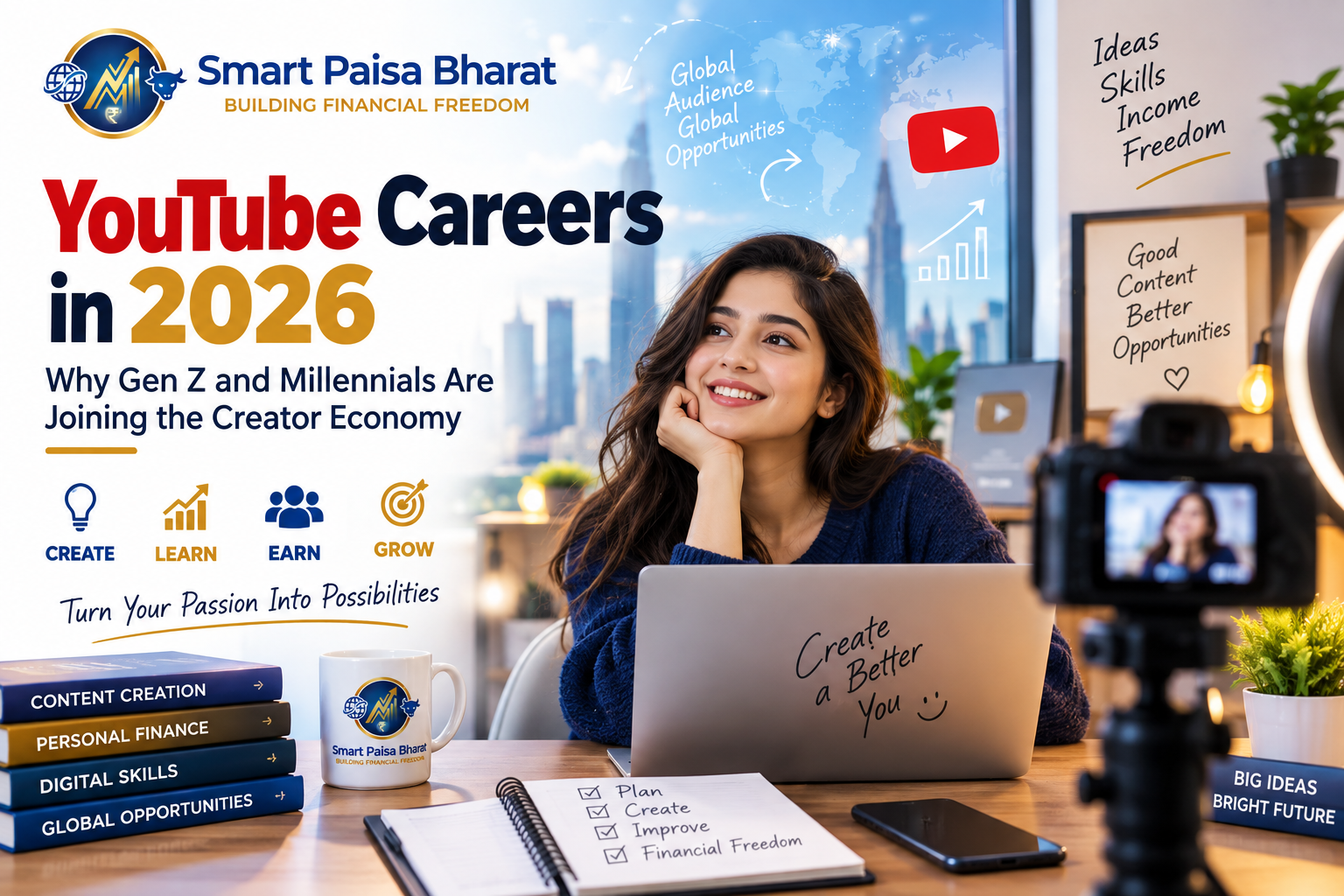
YouTube Careers in 2026: Why Gen Z and Millennials Are Joining the Creator Economy
YouTube is no longer simply a website for watching entertainment. For a growing number of young adults, it has become a place to build an audience, develop valuable skills, launch a business and potentially create a long-term source of income.

That does not mean everyone who starts a channel will become a full-time creator. The reality is much more interesting. YouTube now supports an ecosystem involving creators, editors, designers, researchers, marketers, producers, entrepreneurs and many other professionals.
So, is YouTube a realistic career path in 2026? The answer depends on what you want to build, how consistently you work and whether you can offer something genuinely useful or entertaining to an audience.
Why YouTube Careers Are Getting More Attention in 2026
The creator economy has changed considerably over the past few years. A successful channel can now operate more like a small media business than a personal hobby.
YouTube’s latest U.S. Impact Report, covering 2025, says the platform’s creative ecosystem contributed more than $60 billion to the U.S. GDP and supported more than 540,000 full-time-equivalent jobs.
Those figures are important because the economic effect of a creator is not limited to the person appearing on camera. A growing channel may require video editors, thumbnail designers, writers, production assistants, social-media specialists, accountants, photographers and other professionals.
Gen Z Is Looking at Content Creation Differently
For younger workers, social media is increasingly connected with professional identity and career development. A 2025 Morning Consult survey of 2,201 U.S. adults found that 44% of Gen Z adults said their ideal career includes professional content creation, either full-time or alongside another job.
The same research found that 19% of Gen Z respondents wanted to become full-time content creators, while 25% preferred combining content creation with a traditional job.
That second group is particularly interesting. It shows that the modern creator career does not necessarily require quitting a regular job. For many people, creating content can begin as a side project and develop gradually.
What Makes YouTube Different From a Traditional Career?
A conventional career usually has an employer, a defined role and a relatively predictable structure. Running a YouTube channel is different because the creator often becomes responsible for several parts of the business at once.
- Choosing a topic or niche
- Researching ideas
- Writing scripts
- Recording or producing videos
- Editing and packaging content
- Designing thumbnails
- Understanding audience behaviour
- Building a recognizable personal brand
- Managing income and expenses
- Communicating with viewers and potential partners
In other words, becoming a creator can involve learning several professional skills at the same time.
How Do YouTubers Make Money in 2026?
Advertising is only one part of the creator-business model. Depending on the channel and its audience, creators may use several different revenue streams.
| Income Stream | How It Works |
|---|---|
| Advertising | Eligible creators can earn a share of advertising revenue through the YouTube Partner Program. |
| YouTube Premium | Creators can receive revenue associated with Premium viewers watching their content. |
| Brand Partnerships | Companies may pay creators to promote products or services. |
| Channel Memberships | Eligible creators can offer paid memberships with additional benefits. |
| Shopping & Affiliate Income | Creators can earn through eligible product recommendations and shopping features. |
| Digital Products | Creators can build courses, guides, communities, templates or other products around their expertise. |
YouTube has also been expanding opportunities beyond traditional advertising. The company reported that more than half of channels earning five figures or more in 2024 generated income from sources other than advertising and YouTube Premium.
This is an important lesson for new creators: building an audience can be more valuable than depending on a single revenue source.
YouTube Is Also Creating Careers Behind the Camera
Not everyone wants to become an on-screen personality. Fortunately, the creator economy needs many different types of talent.
Video Editors
Creators need people who can turn raw footage into engaging videos.
Thumbnail Designers
Strong visual packaging can influence whether viewers decide to watch.
Researchers & Writers
Educational and documentary channels often depend on reliable research and clear storytelling.
Channel Managers
Larger creators may need help with publishing, analytics, partnerships and operations.
The Skills That Matter Most for a YouTube Career
Expensive equipment is not necessarily the first thing a new creator needs. A strong idea, clear communication and consistency can matter much more in the early stages.
1. Communication
Whether you teach finance, explain technology, review products or tell stories, the ability to communicate clearly is a major advantage.
2. Storytelling
People rarely remember a collection of facts. They are more likely to remember a useful explanation, interesting story or personal experience.
3. Research
Trust becomes especially important in areas such as finance, technology, health, education and current affairs. Creators who publish information should develop the habit of checking primary and reliable sources.
4. Video Production
Basic knowledge of lighting, audio, editing and framing can dramatically improve the quality of a channel. You do not have to master everything immediately.
5. Analytics
A creator needs to understand what viewers actually respond to. Watch time, retention, traffic sources, returning viewers and click-through behaviour can reveal much more than simply looking at subscriber numbers.
6. Business Thinking
Once a channel begins attracting an audience, the creator has to think beyond views. Pricing partnerships, managing expenses, negotiating deals and diversifying income become part of the job.
What About YouTube Shorts?
Shorts have made video creation more accessible because creators can produce short-form content without building every video like a traditional long-form production.
But Shorts should not automatically be treated as a shortcut to a sustainable career. Short-form content can help creators reach new audiences, while longer videos may provide more room for education, storytelling, community building and deeper subject coverage.
A balanced strategy can therefore involve using Shorts for discovery while developing longer content for viewers who want more depth.
How Much Do You Need to Earn Before Calling It a Career?
There is no universal income number that turns a YouTube channel into a career. Someone may use YouTube as a side income while earning a salary elsewhere, while another creator may eventually depend on the channel as a primary business.
Income can vary significantly depending on audience location, subject matter, advertiser demand, video format, seasonality, audience loyalty, sponsorships and other factors.
YouTube Partner Program: What New Creators Should Know
YouTube provides several monetization features through the YouTube Partner Program (YPP), but creators must meet eligibility requirements and pass YouTube’s review process.
As of 2026, the main advertising-revenue threshold is generally 1,000 subscribers plus either 4,000 qualified public watch hours during the previous 12 months or 10 million qualified Shorts views during the previous 90 days.
YouTube also provides earlier access to certain fan-funding and shopping features for eligible channels that reach lower thresholds. Requirements can vary by feature and country.
Creators should always check the current YouTube Partner Program requirements before making financial plans, because YouTube periodically changes eligibility rules and monetization features.
A Major Change Coming in 2027
There is another reason creators should pay attention to YouTube’s official announcements. YouTube has announced changes to YPP entry requirements for new applicants beginning February 1, 2027.
According to YouTube, new applicants will need 1,000 subscribers plus either 8,000 qualified watch hours in the previous 365 days or 20 million qualified Shorts views in the previous 90 days for full ad and Premium monetization eligibility under the updated thresholds.
The company has also said that existing YPP creators are not affected by those new entry thresholds simply because the thresholds are changing.
AI Is Changing the Creator Workflow
Artificial intelligence is becoming another part of the creator toolkit. It can assist with brainstorming, research organization, transcription, translation, editing and other production tasks.
But there is an important distinction between using technology as a tool and producing generic content at scale. YouTube’s monetization policies emphasize original and useful content, and content that simply reproduces material from elsewhere without adding meaningful value can create monetization problems.
For creators, the better approach is to use AI to speed up parts of the workflow while keeping the human contribution visible through original ideas, experience, analysis, storytelling and creative decisions.
Why YouTube Can Be a Valuable Career Skill Even Without Becoming Famous
This is perhaps the most overlooked part of the creator economy.
You do not need millions of subscribers for the skills learned through YouTube to become useful.
Someone who spends two years learning video editing may become a professional editor. Someone who learns audience research may move into digital marketing. A person who develops strong presentation skills may use those abilities in sales, education, consulting or entrepreneurship.
In that sense, YouTube can function as both a publishing platform and a practical learning environment.
Should You Start a YouTube Channel in 2026?
If you are considering starting, do not begin with the question, “How quickly can I make money?”
A better starting question is: “What can I consistently create that people will find useful, interesting or entertaining?”
Choose a subject you can discuss for a long time. Study existing channels without copying them. Find gaps that you can approach differently. Start with the equipment you already have, then improve your production quality as your skills and audience develop.
A Simple 90-Day YouTube Career Plan
- Days 1–15: Select a focused topic and study your target audience.
- Days 16–30: Develop 20–30 original video ideas and create a repeatable production workflow.
- Days 31–60: Publish consistently and study audience retention, comments and traffic sources.
- Days 61–75: Identify the subjects and formats that generate the strongest audience response.
- Days 76–90: Improve your thumbnails, titles, storytelling and publishing process based on real data.
The goal of the first 90 days should not be celebrity status. It should be learning what works, developing production discipline and building a repeatable system.
The Bottom Line
YouTube careers in 2026 are broader than the traditional idea of becoming a famous YouTuber. The platform supports creators, businesses and an expanding network of professionals working behind the scenes.
The latest U.S. economic data demonstrates that the creator ecosystem has become large enough to generate measurable economic activity, while research among Gen Z shows that content creation is increasingly being considered alongside conventional career paths.
Still, YouTube is not a guaranteed-income machine. Building a sustainable career requires patience, useful content, consistency, business awareness and the willingness to adapt.
For someone willing to treat content creation as a real skill rather than a quick-money experiment, YouTube can become much more than a place to upload videos. It can become a portfolio, a business, a learning platform and potentially a career.
Frequently Asked Questions
Is YouTube a good career option in 2026?
YouTube can be a viable career path for some people, but income is not guaranteed. Success depends on content quality, audience demand, consistency, monetization strategy and business skills.
Can Gen Z make money on YouTube?
Yes. Eligible creators can potentially earn through advertising, YouTube Premium, memberships, shopping, brand partnerships and other revenue streams. Eligibility varies by feature and location.
Do I need expensive equipment to start YouTube?
No. Beginners can start with a smartphone and gradually improve audio, lighting and video production as their channel develops.
Can YouTube be a side hustle?
Yes. Many creators begin while studying or working another job. Building the channel gradually can reduce the pressure to depend on unpredictable income immediately.
How many subscribers do I need to monetize YouTube?
For full advertising revenue through YPP under the 2026 rules, the standard threshold is 1,000 subscribers plus either 4,000 qualified public watch hours in the previous 12 months or 10 million qualified Shorts views in the previous 90 days. Other monetization features can have different requirements.
Will AI replace YouTube creators?
AI is changing how content can be produced, but creators still need original ideas, judgment, storytelling, audience understanding and a distinctive point of view. Using AI as a production tool is different from publishing repetitive or copied material.
Editorial Note
This article is intended for educational and informational purposes. YouTube monetization rules, eligibility requirements and available features can change. Always verify current requirements directly through YouTube before making financial or career decisions.