The Ultimate Content Marketing Playbook for 2026
Content marketing has changed. Publishing more articles, adding more keywords, or producing endless social posts is no longer a reliable strategy on its own. In 2026, the brands that stand out are the ones that understand their audience, create genuinely useful content, and use AI as a tool rather than a replacement for human thinking.
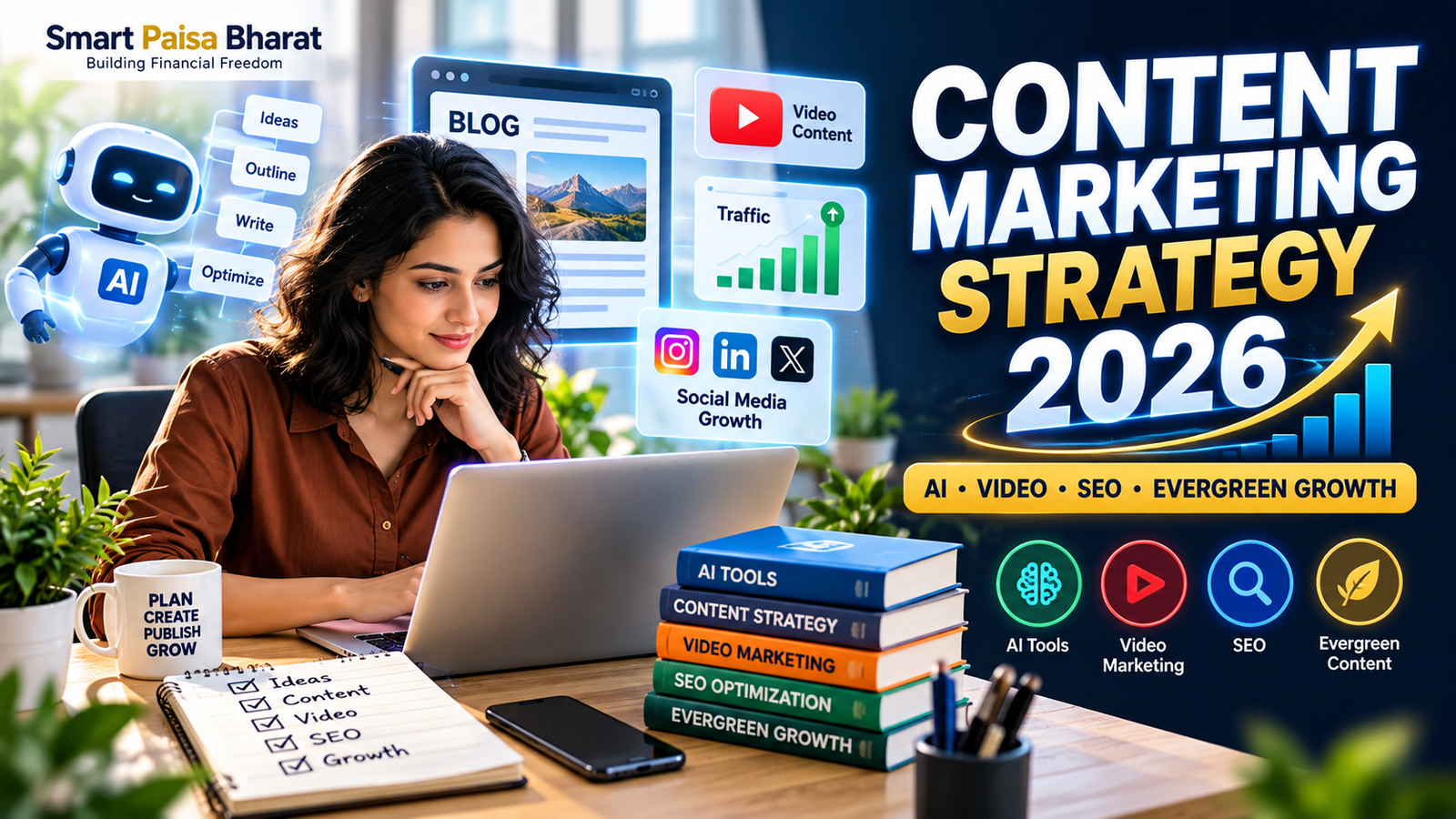
This guide explains how to build a practical content marketing strategy for 2026 using AI, video, original insights, search optimization, social content and evergreen resources.
What Is Content Marketing in 2026?
Content marketing is the process of creating and distributing useful information that helps a specific audience solve problems, make decisions or understand a subject better.
The basic idea has not changed. What has changed is the way people discover and consume information.
A reader may discover an article through Google Search, an AI-powered search experience, YouTube, Instagram, LinkedIn, a newsletter or a recommendation from another person. That means a modern content strategy cannot depend on one platform alone.
The goal should not simply be to publish more. The goal should be to create content that is useful enough for someone to remember, share, bookmark or return to later.
Why Content Strategy Needs a New Approach in 2026
AI has made content production faster. Anyone can now generate an outline, rewrite a paragraph or create dozens of basic articles in a short period. As a result, simply producing more content does not automatically create an advantage.
The real opportunity is to combine technology with something AI cannot automatically manufacture: your experience, observations, examples, judgment and understanding of your audience.
1. Start With the Audience, Not the Keyword
One of the easiest mistakes in content marketing is starting with a keyword instead of a person.
Before writing an article, ask three simple questions:
- Who is going to read this?
- What problem are they trying to solve?
- What should they be able to do after reading it?
For example, instead of creating a generic article about budgeting, you could create a practical guide for young professionals who are trying to manage their first salary.
The second approach gives you a clearer audience, a stronger angle and more opportunities to add real examples.
2. Build Topic Clusters Instead of Isolated Articles
A strong website should not look like a collection of unrelated posts. It should demonstrate depth around the subjects it covers.
One effective approach is to create a main pillar article and connect it with supporting articles.
Example: Content Marketing Topic Cluster
- Pillar: Content Marketing Strategy 2026
- AI Content Creation Guide
- Video Content Marketing Strategy
- Evergreen Content Ideas
- SEO Content Writing Guide
- Social Media Content Strategy
- Content Repurposing Guide
- How to Measure Content Performance
These articles can be connected with relevant internal links. This helps readers move naturally from one topic to another instead of leaving the website after reading a single page.
3. Use AI as a Content Assistant, Not the Author
Artificial intelligence can be extremely useful for content work. It can help with research organization, brainstorming, outlines, headline ideas, editing and repurposing.
But there is an important difference between using AI to improve your work and publishing large amounts of generic material without adding anything useful.
Good Uses of AI
- Brainstorming article angles
- Creating an initial outline
- Finding gaps in an existing draft
- Improving readability
- Generating social-media variations
- Turning a long article into short-form content
- Creating questions readers may ask
- Organizing research notes
Where Human Input Matters Most
- Personal experience
- Original examples
- Opinions clearly identified as opinions
- First-hand testing
- Fact checking
- Industry context
- Final editing and judgment
The strongest workflow is therefore not “AI writes everything.” It is human research → AI assistance → human verification → human editing → useful final content.
4. Create Content That Goes Beyond the Obvious
Search results are full of articles that repeat the same basic advice. If your article says exactly what hundreds of other pages already say, there is little reason for a reader to remember your version.
Try adding something that demonstrates your own thinking.
Examples of Original Value
- A real workflow you have tested
- A step-by-step example
- A comparison based on clearly explained criteria
- Common mistakes you have observed
- A practical checklist
- Before-and-after examples
- Lessons learned from implementation
Even a simple personal observation can make an otherwise generic article more useful.
5. Video Is Now Part of the Content Strategy
Written articles remain useful, but audiences increasingly consume information through video.
You do not need an expensive studio to begin. A useful video can be created with a smartphone, screen recording or a simple presentation.
Content You Can Turn Into Video
- How-to tutorials
- Product demonstrations
- Screen-recording tutorials
- Short educational videos
- Explainer videos
- Frequently asked questions
- Case studies
A single detailed article can become a short video, a carousel, several social posts, a newsletter and a short-form video series.
6. Turn One Piece of Content Into Many
Content repurposing is one of the most practical ways to maintain consistency without constantly starting from zero.
Imagine you publish one detailed guide. From that single resource you could create:
- One long-form article
- One YouTube video
- Three short videos
- Five social posts
- One infographic
- One email newsletter
- Several FAQ-style answers
The key is not to copy and paste the same paragraph everywhere. Adapt the idea to the format and audience of each platform.
7. Build an Evergreen Content Library
Trending topics can bring short bursts of attention, but evergreen content can continue to be useful long after publication.
Evergreen topics answer questions that people are likely to ask repeatedly.
Examples
- Beginner guides
- Glossaries
- Step-by-step tutorials
- Checklists
- Templates
- Frequently asked questions
- Comparison guides
- How-to resources
Evergreen does not mean “publish once and forget forever.” A good evergreen article should be reviewed when facts, tools, regulations, products or technology change.
8. Make Your Content Easy for Search and AI Systems to Understand
Search optimization still matters in 2026. However, the foundation remains the same: create useful content, make it accessible to search engines and organize it clearly.
Use descriptive headings, logical sections, relevant internal links, meaningful image descriptions and clear page titles.
A Useful Article Structure
- Clear title
- Short introduction
- Direct answer to the main question
- Logical H2 and H3 sections
- Examples
- Practical steps
- Common mistakes
- Frequently asked questions
- Final summary
This structure also makes the article easier for humans to scan and understand.
9. Write for Real Questions, Not Just Search Phrases
People rarely think only in keywords. They think in questions and problems.
Instead of repeatedly inserting the phrase “content marketing strategy 2026”, naturally answer questions such as:
- What is a content marketing strategy?
- How can small businesses use AI for content?
- How often should I publish?
- What type of content should I create first?
- How can I turn one article into social content?
- How do I measure whether content is working?
Natural language makes the article more useful and reduces the temptation to force keywords into every paragraph.
10. Measure What Actually Matters
Page views can be useful, but they do not tell the whole story.
Depending on your goal, you may also want to monitor:
- Organic impressions
- Organic clicks
- Click-through rate
- Engaged visitors
- Returning visitors
- Email sign-ups
- Leads or enquiries
- Conversions
- Internal-link clicks
The right measurement depends on the purpose of the content. An educational article and a product landing page should not necessarily be judged by the same metric.
11. Avoid the “Publish and Forget” Approach
A content strategy should include maintenance.
Every few months, review important articles and ask:
- Are the facts still accurate?
- Are the links still working?
- Has the topic changed?
- Can I add a better example?
- Are there newer questions readers are asking?
- Can I improve the introduction?
- Can I make the article easier to scan?
Updating content should mean making a meaningful improvement, not simply changing the publication date.
12. A Simple Content Marketing Workflow for 2026
If you are working alone or with a small team, keep the process practical.
Step 1 — Choose the Problem
Identify a real question or problem your audience wants to solve.
Step 2 — Research
Review reliable sources, existing information and questions people commonly ask about the subject.
Step 3 — Create Your Own Angle
Decide what experience, example, explanation or perspective you can add.
Step 4 — Build the Outline
Organize the article around the reader’s journey rather than around a list of keywords.
Step 5 — Draft
Write naturally. Use AI assistance where it saves time, but verify and rewrite the important sections yourself.
Step 6 — Improve the Experience
Add headings, examples, lists, images, internal links and useful navigation.
Step 7 — Fact Check
Verify statistics, dates, product information, regulations and other time-sensitive claims before publishing.
Step 8 — Publish and Repurpose
Turn the main idea into appropriate social, video or newsletter content.
Step 9 — Review Performance
Use your analytics and Search Console data to understand what readers are actually finding useful.
Content Marketing Mistakes to Avoid in 2026
- Publishing large volumes of generic AI-written content
- Writing only because a topic is trending
- Stuffing keywords into every paragraph
- Copying competitor article structures too closely
- Using statistics without checking their source
- Changing dates without substantially improving the article
- Ignoring mobile readability
- Creating content without understanding the audience
- Publishing without internal links
- Never reviewing old content
The goal is not to create the largest content library. The goal is to build a library that people actually find useful.
Frequently Asked Questions About Content Marketing in 2026
What is the best content marketing strategy for 2026?
There is no single strategy that works for every business. A practical approach is to understand your audience, build useful topic clusters, create original content, use AI carefully, include video where appropriate and regularly improve your most important pages.
Can AI be used for content marketing?
Yes. AI can assist with research organization, brainstorming, outlining, editing and repurposing. Human review remains important for accuracy, originality, experience and final quality.
Is SEO still important in 2026?
Yes. Search engines still rely on fundamental SEO practices to discover, understand and evaluate web content. AI search experiences also build on search systems, so technical accessibility and useful original content remain important.
Is video necessary for every content marketing strategy?
Not necessarily. Video is useful when it improves the way a topic is explained or demonstrated. A written guide may still be the better format for subjects that require detailed reading.
How often should I publish new content?
There is no universal publishing frequency. Consistency and usefulness are more important than publishing a specific number of articles every week. A smaller number of genuinely useful resources can be more valuable than a large volume of thin content.
What makes content evergreen?
Evergreen content answers questions that remain useful over time. Examples include tutorials, beginner guides, checklists, explanations and practical resources. These pages should still be reviewed when the underlying information changes.
The Bottom Line
Content marketing in 2026 is not about trying to beat the internet by publishing more than everyone else.
It is about becoming useful.
Use technology to research faster, organize ideas and repurpose your work. Then add the part that makes your content worth reading: your experience, examples, judgment and understanding of the people you are trying to help.
Build a mixture of timely and evergreen resources. Make those resources easy to navigate. Connect related articles. Use video when it genuinely improves the explanation. Then measure what readers actually respond to and improve your content over time.