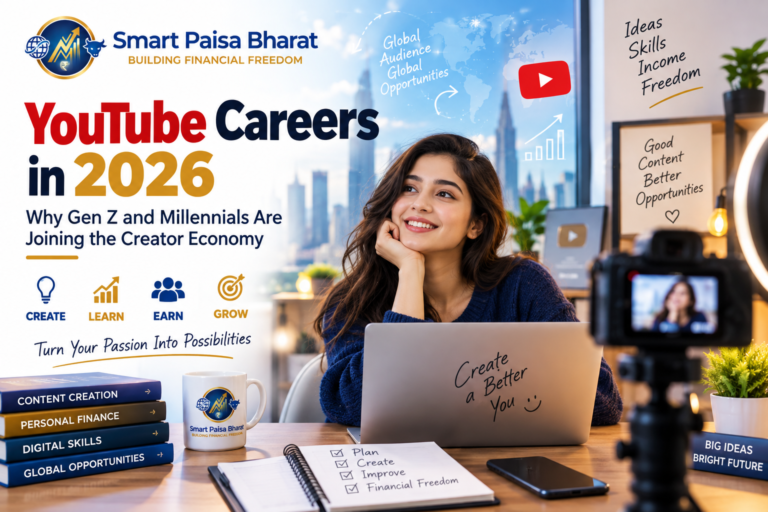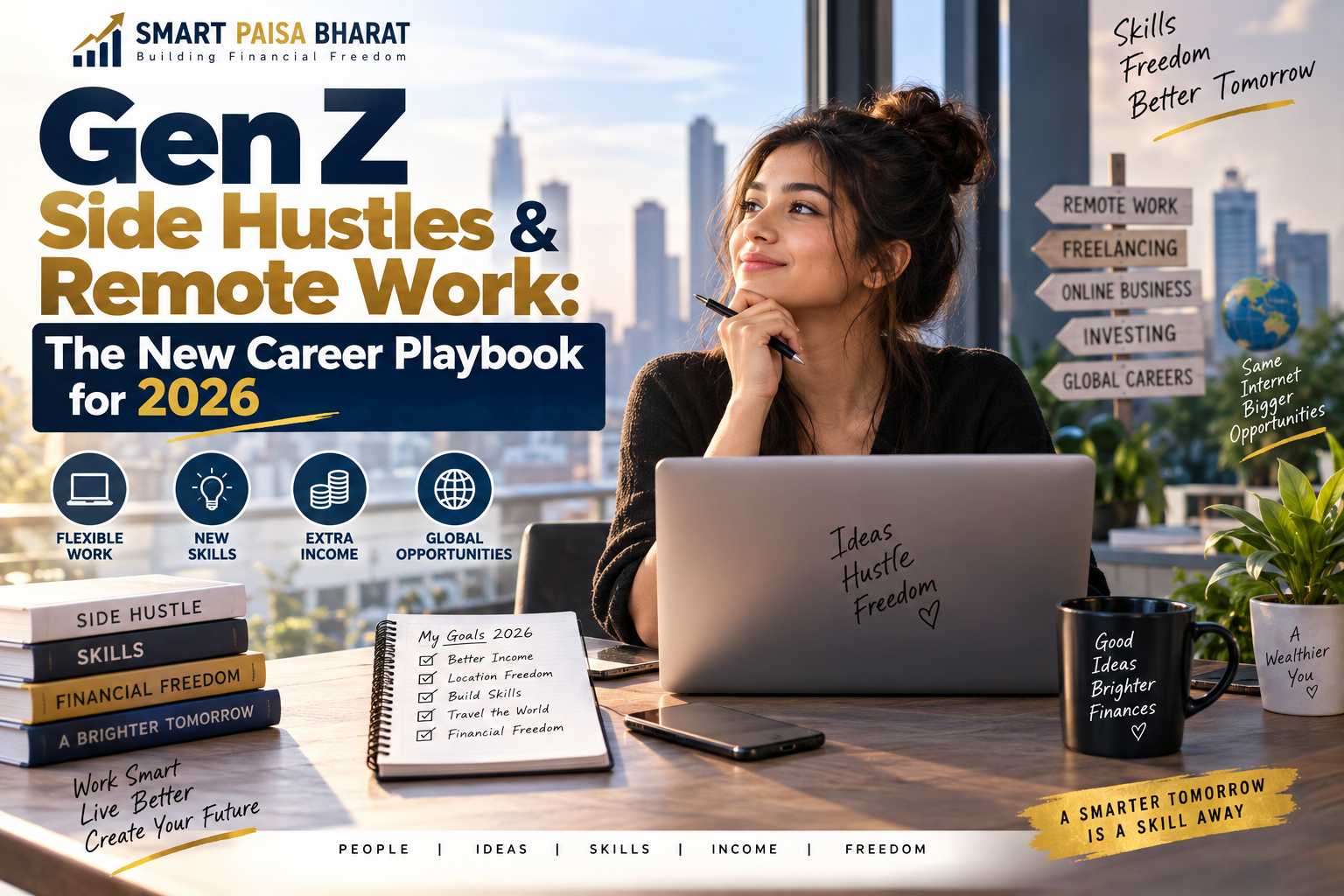
Gen Z Side Hustles & Remote Work: The New Career Playbook for 2026
Gen Z Side Hustles and Remote Work: How the New American Dream Is Changing
Work is being redesigned in real time. For Gen Z, the traditional sequence of graduating, entering one company, climbing a predictable corporate ladder and eventually retiring is no longer the only route toward financial independence.
A different career architecture is taking shape.
Young professionals are combining full-time employment with freelance assignments, digital businesses, creator income, contract work, online learning and technology-assisted services. At the same time, employers are placing greater emphasis on demonstrable abilities rather than relying exclusively on academic credentials.
This does not mean that every Gen Z worker wants to abandon the office or become an entrepreneur. It means career decisions are becoming more individual, flexible and skills-oriented.
Here is what that shift means for anyone entering the workforce in 2026.
Why the Traditional Career Ladder Is Losing Its Monopoly
For decades, career progression was often imagined as a straight line:
- Earn a degree.
- Secure an entry-level position.
- Stay with an employer.
- Collect promotions.
- Increase income gradually.
- Retire after decades of employment.
That structure still exists, but it is no longer the only career model available.
Technology has reduced the cost of starting small. A person can build a portfolio website, offer a specialized service, create educational material, sell digital products, manage social media accounts or work with clients in another country without establishing a conventional office-based business.
At the same time, employers are changing how they evaluate applicants. Skills-first recruitment is gaining ground, particularly for early-career positions. NACE’s 2026 employer research found that 70% of surveyed employers reported using skills-based hiring for entry-level recruitment.
That creates an important distinction:
A qualification can open a door, but evidence of capability can help someone walk through it.
Gen Z Is Building a Portfolio Career
A portfolio career is built around multiple professional activities rather than one permanent occupational identity.
Someone might work as a marketing specialist during the day, create financial education content in the evening, freelance for two companies on weekends and develop an online course over several months.
Another person might combine:
- A full-time technology position
- Freelance design projects
- Affiliate income
- Digital products
- Consulting work
The objective is not necessarily to create five income streams immediately. The more practical idea is to develop transferable skills that can function in several markets.
Deloitte’s 2026 Gen Z and Millennial research found that nearly 30% of surveyed Gen Z respondents had a part- or full-time side job. The survey also found that some respondents view side work as a way to build skills and relationships rather than simply generate additional income.
This is significant because a side project can become more than a second paycheck. It can become a professional laboratory.
Side Hustles Are Becoming Skill Laboratories
A side hustle does not automatically become a successful business. Some generate modest income, some disappear after a few months and others eventually become full-time ventures.
The valuable part is often the experience gained while operating one.
Consider someone launching a small newsletter.
They may begin with writing. Soon they discover email marketing, audience research, search optimization, analytics, visual design, landing pages and customer psychology.
The project has now created a collection of marketable capabilities.
That is why the strongest side hustle strategy is not simply:
“What can make money quickly?”
A better question is:
“What can generate income while strengthening a skill that employers or customers already value?”
Examples of skill-building side projects
- Writing: newsletters, technical articles and research summaries
- Design: presentation design, thumbnails and brand assets
- Technology: automation, websites and no-code workflows
- Marketing: social media management and email campaigns
- Education: tutoring, workshops and digital courses
- Research: market research and competitor analysis
- Video: editing, short-form production and educational content
AI Is Changing What Entry-Level Workers Need to Bring
Artificial intelligence is becoming part of ordinary professional workflows.
The important career question is therefore shifting from “Will AI replace my job?” toward “Which parts of my work can AI accelerate, and which human capabilities become more valuable when that happens?”
Current workforce research points toward growing demand for adaptable workers who can combine technology with communication, judgement, creativity and problem-solving.
For Gen Z, AI fluency can therefore become a career multiplier.
That does not mean blindly delegating every task to an AI system. It means understanding where technology can reduce repetitive work while retaining human oversight.
Useful AI-assisted capabilities include:
- Research and information synthesis
- Spreadsheet analysis
- Content outlining
- Presentation preparation
- Basic coding assistance
- Workflow automation
- Customer-service drafting
- Data organization
- Market research
The differentiator will increasingly be the ability to combine AI tools with domain knowledge.
Knowing how to produce an AI-generated answer is less valuable than knowing whether the answer is accurate, useful and appropriate for the situation.
Skills Can Travel Across Industries
One of the biggest advantages of developing transferable skills is mobility.
A person who understands data analysis can potentially apply that ability in finance, retail, healthcare, logistics or technology.
A strong communicator can work in sales, marketing, customer success, education or community management.
A person experienced in automation can help different businesses reduce repetitive administrative work.
This creates a career strategy based around capabilities instead of job titles.
| Transferable Skill | Possible Applications |
|---|---|
| Data analysis | Finance, marketing, operations, research |
| AI workflow design | Operations, content, customer support, administration |
| Communication | Sales, management, education, customer success |
| Project management | Technology, consulting, marketing, operations |
| Digital marketing | E-commerce, media, startups, professional services |
| Video production | Advertising, education, social media, entertainment |
Remote Work Is Not Simply About Working From Home
Remote employment is often presented as a lifestyle benefit, but its deeper impact is geographic.
A remote-capable worker may have access to organizations outside their immediate city or region. That can expand the range of employers they can consider.
However, remote work also introduces new demands.
Employees need to communicate clearly without constant face-to-face interaction. They need to organize their workload, document progress and maintain visibility without relying on physical presence.
Hybrid arrangements are also important. Recent U.S. labor research shows that remote work has remained a persistent feature of employment while hybrid arrangements have become more common after the pandemic-era surge in telework.
For Gen Z, the practical lesson is simple:
Do not build your career around one workplace format.
Build skills that remain useful whether the team works from a headquarters, home office or a combination of both.
Why Some Young Workers Still Want Office Experience
The remote-work conversation is more complicated than the assumption that every young employee wants permanent home-based employment.
Early-career workers can benefit from observing experienced colleagues, building professional relationships and receiving informal feedback.
Recent reporting based on Gallup research has also highlighted that Gen Z’s preferences around remote and office work are more mixed than the stereotype suggests.
For someone beginning a career, the strongest arrangement may depend on the occupation and the learning opportunities available rather than on a simple remote-versus-office preference.
A young analyst may value concentrated office exposure during the first years of employment. A software developer may have a very different workflow. A salesperson may need regular customer interaction.
Career stage and job design matter.
The Rise of Skills-First Hiring
One of the most important employment developments for younger workers is the growing emphasis on demonstrable competencies.
NACE’s 2026 Job Outlook research reported that 70% of surveyed employers use skills-based hiring for entry-level recruitment, while many employers apply the approach during screening and interviews.
This changes how candidates should present themselves.
Instead of writing:
“I am passionate about digital marketing.”
A stronger portfolio might demonstrate:
- A campaign the candidate created
- The audience it targeted
- The tools used
- The testing process
- The measurable outcome
- What the candidate learned
Evidence makes a skill easier to evaluate.
Build proof, not just claims
A personal portfolio can contain:
- Case studies
- Independent projects
- Freelance assignments
- GitHub repositories
- Research reports
- Writing samples
- Design projects
- Data dashboards
- Video projects
Even a self-initiated project can demonstrate initiative when it is thoughtfully documented.
AI Makes the Portfolio More Important, Not Less
Generative AI has made it easier to produce resumes, cover letters and generic application material.
That creates a new problem: when everyone can produce polished text quickly, polished text alone becomes less distinctive.
A portfolio can provide another layer of evidence.
Instead of simply claiming expertise, candidates can show how they approached a problem, what tools they used, what decisions they made and what result emerged.
This is particularly useful for early-career applicants who have limited conventional employment history.
Five Career Assets Gen Z Should Build in 2026
1. A Marketable Core Skill
Choose one capability that businesses already pay for.
Examples include analytics, software development, sales, accounting, design, cybersecurity, digital marketing or specialized technical support.
2. AI Fluency
Learn how AI can support your specific occupation rather than attempting to master every new application.
3. A Public Portfolio
Create a simple online location where people can see your work.
4. Professional Relationships
Career opportunities often travel through people. Maintain genuine professional connections with colleagues, mentors, clients, classmates and industry communities.
5. Financial Resilience
Additional income can create flexibility, but income diversification should not become an excuse for uncontrolled spending.
A side income stream is more useful when part of it strengthens savings, reduces financial pressure or funds further skill development.
What a Practical Gen Z Career Strategy Could Look Like
There is no universal formula, but a practical framework can look like this:
- Choose a core profession. Build depth instead of chasing every trend.
- Identify adjacent skills. Find abilities that increase your value within that profession.
- Learn AI applications. Automate repetitive tasks while retaining quality control.
- Create proof of work. Turn projects into portfolio pieces.
- Experiment with side income. Start small and measure whether the activity is sustainable.
- Develop professional relationships. Learn from people already working in your target field.
- Review your direction periodically. Career flexibility works best when decisions are based on evidence rather than impulse.
The New American Dream May Be About Control
The phrase “American Dream” traditionally evokes home ownership, financial security, professional advancement and a better life for the next generation.
For many younger workers, the definition is becoming more personal.
It may involve earning enough to control one’s schedule.
It may mean working from different locations.
It may mean owning a small digital business alongside a conventional career.
It may mean acquiring valuable skills without becoming dependent on a single employer.
Or it may simply mean having enough financial stability to make career decisions without constant economic pressure.
These goals are not necessarily opposed to traditional employment. A full-time job can provide experience, benefits, predictable income and professional development while a side project provides experimentation.
The emerging model is therefore not necessarily employee versus entrepreneur.
It can be employee plus creator, employee plus freelancer, employee plus investor, or employee plus learner.
What This Means for Employers
Organizations are also adapting.
If younger workers increasingly value development, flexibility and meaningful progression, employers may need to make career pathways easier to understand.
That can involve clearer skill frameworks, practical mentorship, internal mobility and opportunities to develop technology-related capabilities.
AI adoption adds another layer. Employers need people who can use new tools without abandoning professional judgement.
The strongest workplaces may therefore be those that treat technology as part of workforce development rather than simply as a mechanism for reducing headcount.
Final Takeaway
Gen Z is entering a labor market where career paths are becoming less linear, technology is changing task distribution and employers are placing greater attention on demonstrable skills.
Side hustles are becoming one component of this transformation, but they are not a guaranteed shortcut to wealth.
Remote work provides flexibility, but it also requires strong communication and self-management.
AI can increase productivity, but technology knowledge without judgement has limited value.
And degrees remain relevant in many occupations, while skills-first hiring is expanding in others.
The practical advantage belongs to people who can keep learning, demonstrate what they can do and adapt their professional toolkit as the labor market changes.
The new career advantage is not having one perfect job. It is building a collection of useful capabilities that can travel with you.
Frequently Asked Questions
What are the best side hustles for Gen Z in 2026?
Options include freelance writing, video editing, digital marketing, tutoring, design, software services, research assistance, automation services and digital products. The most suitable option depends on existing skills, available time and market demand.
Is remote work still relevant in 2026?
Yes. Remote and hybrid arrangements remain established features of the labor market, although availability varies substantially by occupation and employer.
Are companies moving toward skills-based hiring?
Evidence from NACE’s 2026 employer research indicates that skills-based hiring is being used by a growing share of surveyed employers, particularly in entry-level recruitment.
Should Gen Z learn AI?
AI literacy can be valuable across many occupations. The most useful approach is to learn tools that complement a person’s existing professional discipline rather than chasing every newly released application.
Does a college degree still matter?
Yes, depending on the occupation. Many professions continue to require specific educational credentials or licensing. At the same time, skills-first recruitment is creating additional pathways in some fields.
Can a side hustle become a full-time career?
It can, but there is no guarantee. Before replacing primary employment, evaluate revenue consistency, expenses, customer demand, taxes, benefits and financial reserves.
Smart Paisa Bharat — Building Financial Freedom