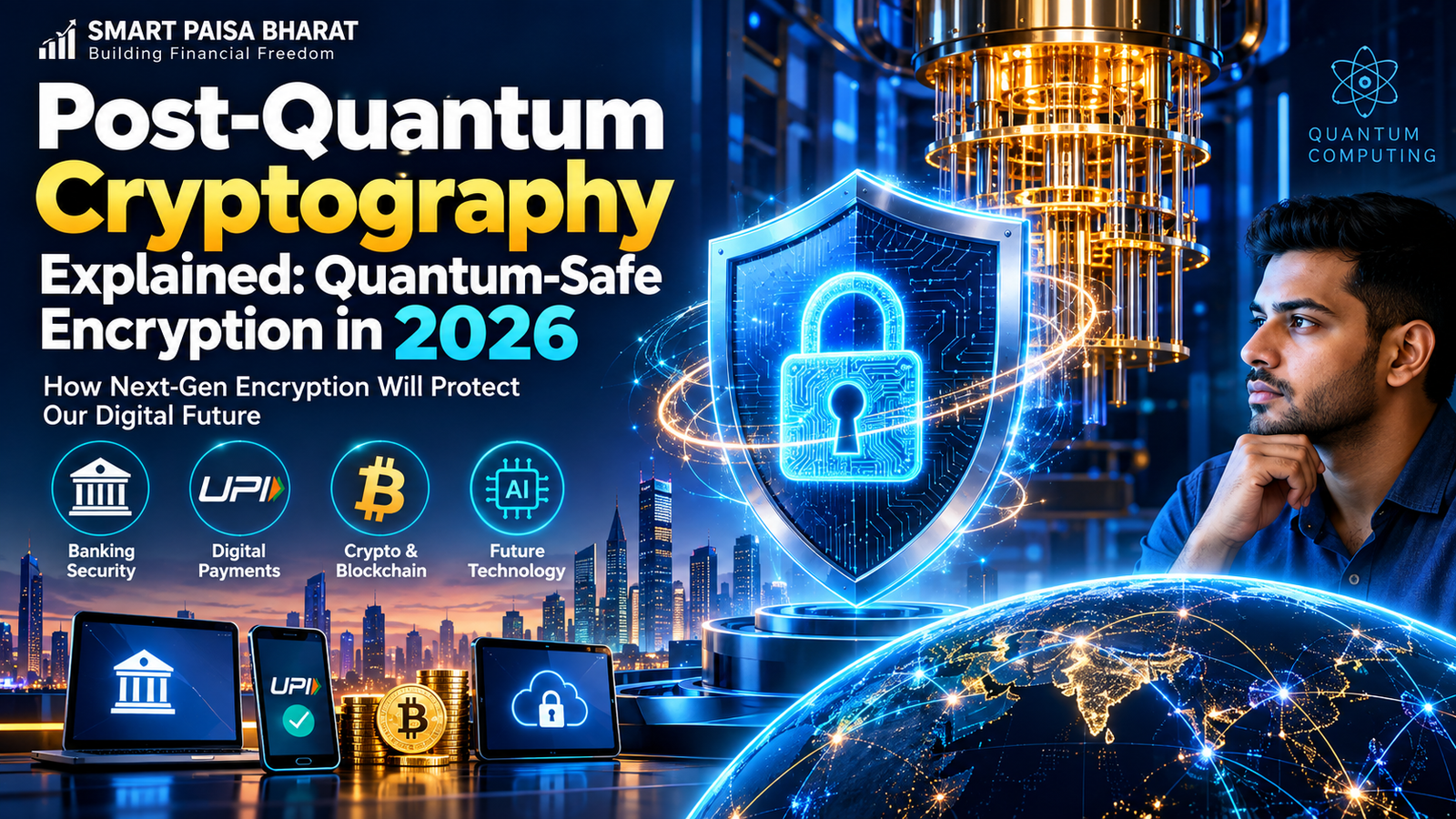
Post-Quantum Cryptography Explained: Quantum-Safe Encryption in 2026
Technology & Cybersecurity Guide | 2026
The way we protect passwords, financial transactions, private messages and business information is entering a new phase. Quantum computing could eventually challenge some of the mathematical foundations that protect today’s digital world. The solution is already taking shape: post-quantum cryptography.
In this guide, we explain what post-quantum cryptography means, why it matters, which encryption standards are ready for use, and how individuals, businesses and financial institutions can prepare for the next generation of cybersecurity.
1. What Is Post-Quantum Cryptography?
Post-quantum cryptography (PQC) is a branch of cybersecurity that develops cryptographic algorithms designed to protect digital information against attacks from both conventional computers and sufficiently powerful quantum computers.
Think of encryption as a digital lock. Today, many of the locks protecting internet communications rely on mathematical problems that are extremely difficult for ordinary computers to solve. A sufficiently advanced quantum computer could change the difficulty of solving some of those problems.
Post-quantum cryptography introduces different mathematical approaches intended to remain secure even when quantum computing advances. Unlike solutions that require a quantum communication network, these algorithms can be implemented in conventional computers, smartphones, servers and other existing digital systems.
This makes PQC particularly important for systems that need to remain secure for many years, including financial services, government records, confidential business information and digital identity systems.
Why does it matter in 2026?
The transition is no longer just an academic research topic. NIST finalized its first three post-quantum cryptography standards in August 2024, giving technology providers and organizations a defined starting point for implementation.
The practical challenge is now to identify where vulnerable cryptography is used, test compatible replacements and migrate systems without interrupting essential services.
In simple words: Post-quantum cryptography is about upgrading today’s digital security before future computing capabilities make some existing protections unsafe.
2. How Quantum Computing Challenges Encryption
Conventional computers process information using bits, which represent either 0 or 1. Quantum computers use quantum bits, commonly called qubits, and take advantage of quantum mechanical effects to perform certain calculations differently.
Quantum computing is not simply a faster version of an ordinary computer. Its potential advantage depends on the problem being solved. Some tasks could see major improvements, while others may receive little or no practical benefit.
Shor’s algorithm and public-key cryptography
One important theoretical development is Shor’s algorithm. On a sufficiently powerful, fault-tolerant quantum computer, it could solve integer factorization and discrete logarithm problems much more efficiently than known classical methods.
These mathematical problems underpin widely used public-key systems, including RSA and elliptic-curve cryptography. Such systems help establish secure connections, authenticate identities and protect digital communications.
A quantum computer capable of running these attacks at a cryptographically relevant scale could undermine security mechanisms that are trusted today.
Does this mean quantum computers can hack every password?
No. The distinction matters. Quantum computers do not automatically reveal every password, bypass every security system or defeat all forms of encryption.
Shor’s algorithm presents a major concern for particular public-key cryptographic systems. Symmetric encryption, cryptographic hashes and password-based protections have different security properties and require separate analysis.
For example, Grover’s algorithm offers a theoretical quadratic speedup for certain unstructured search problems. It does not instantly break AES or make every encrypted file readable. Appropriate key sizes and implementation choices remain important.
Important: Current quantum computers are not known to be capable of breaking widely deployed modern cryptography at scale. The date when a cryptographically relevant quantum computer might become available remains uncertain.
3. What Happens to Today’s Encryption?
Modern digital security relies on several different types of cryptography. Understanding their roles helps explain why the transition to quantum-safe security is not a one-size-fits-all replacement.
| Technology | What it does | Quantum-related concern |
|---|---|---|
| RSA | Public-key encryption and digital signatures | Vulnerable in principle to Shor’s algorithm on a sufficiently powerful quantum computer. |
| ECC | Key agreement and digital signatures | Common elliptic-curve systems are also vulnerable in principle to quantum attacks. |
| AES | Symmetric encryption of data | Not affected by Shor’s algorithm in the same way; larger keys can help address known quantum search advantages. |
| SHA-2 and SHA-3 | Hashing, integrity and related cryptographic operations | Quantum search can affect security margins, but these functions are not simply broken by Shor’s algorithm. |
Many internet connections use public-key cryptography to establish or authenticate a connection and symmetric cryptography to protect the actual data transferred.
This is why the transition involves more than changing an encryption setting. Digital certificates, authentication systems, software updates, hardware, network protocols and cryptographic libraries may all require attention.
The objective is not to abandon every existing security technology. It is to identify vulnerable components and adopt suitable quantum-resistant replacements while maintaining a secure and interoperable system.
4. The Harvest Now, Decrypt Later Threat
One of the most discussed risks in quantum cybersecurity is known as “harvest now, decrypt later.”
Imagine an attacker intercepting encrypted information today. The attacker may be unable to read it with current technology, but could store a copy and wait to see whether future advances make it possible to decrypt.
This creates a special concern for information that needs to remain confidential for a long period. Examples include sensitive financial records, intellectual property, government communications and confidential research.
Why long-term data needs attention
Suppose a company encrypts a confidential research archive in 2026 and expects the information to remain secret for another 15 years. If an attacker captures the encrypted data and a sufficiently powerful quantum computer becomes available during that period, the original protection may no longer be adequate.
This is a risk scenario, not a statement that every encrypted communication is being intercepted or that future decryption is guaranteed. The actual risk depends on the data, the cryptographic methods, the attacker’s capabilities and the useful lifetime of the information.
Organizations should therefore consider two questions: How long must this information remain confidential, and how long will it take to replace the cryptography that protects it?
When the required confidentiality period is longer than the expected migration period, early preparation becomes particularly important.
5. NIST’s Three Finalized Post-Quantum Cryptography Standards
The National Institute of Standards and Technology (NIST) published three finalized post-quantum cryptography standards on August 13, 2024. They define algorithms intended to provide protection against future quantum attacks while supporting practical digital systems.
These standards provide a common technical foundation for software developers, hardware manufacturers, cybersecurity providers and organizations planning their cryptographic transition.
| Standard | Algorithm | Main purpose |
|---|---|---|
| FIPS 203 | ML-KEM | Establishing shared secret keys over a public channel. |
| FIPS 204 | ML-DSA | Digital signatures, authentication and integrity verification. |
| FIPS 205 | SLH-DSA | Digital signatures based on hash functions. |
FIPS 203: ML-KEM
ML-KEM stands for Module-Lattice-Based Key-Encapsulation Mechanism. It is derived from the CRYSTALS-Kyber algorithm.
Its role is to help two parties establish a shared secret key over a public communication channel. That shared key can then be used with symmetric cryptography to protect information exchanged between them.
In everyday terms, ML-KEM helps create the secret key that two systems can use to secure their conversation. It is not itself a replacement for every encryption algorithm used to encrypt files or messages.
FIPS 204: ML-DSA
ML-DSA, derived from CRYSTALS-Dilithium, is a digital signature standard. Digital signatures help verify who signed a message or document and whether it has been changed after signing.
Potential applications include software signing, authentication systems, document verification and secure communications.
FIPS 205: SLH-DSA
SLH-DSA is derived from SPHINCS+ and uses hash-based cryptographic techniques to create digital signatures.
It provides a different mathematical approach from the lattice-based ML-DSA standard. Having distinct approaches is useful when evaluating long-term cryptographic resilience and alternative implementations.
What about HQC and FALCON?
NIST selected HQC for standardization in March 2025 as an additional key-establishment algorithm. HQC is based on error-correcting-code mathematics and is intended to provide an alternative to lattice-based key establishment.
HQC should not be confused with the three finalized FIPS standards listed above. Its selection for standardization is a separate step in the process.
NIST has also selected FALCON for a separate digital signature standard, FIPS 206, which is in development. Organizations should check the current official NIST publications before deploying algorithms that are still undergoing standardization.
Practical takeaway: For implementation decisions, use the applicable finalized standards, validated cryptographic products and current guidance rather than relying on experimental algorithms or marketing claims.
6. Post-Quantum Cryptography vs Quantum Cryptography
The two terms sound similar, but they describe different approaches to protecting information.
| Feature | Post-Quantum Cryptography | Quantum Cryptography |
|---|---|---|
| Foundation | Mathematical algorithms designed to resist quantum attacks. | Uses principles of quantum physics. |
| Infrastructure | Can run on conventional computing hardware. | Some approaches require specialized quantum communication equipment. |
| Examples | ML-KEM, ML-DSA and SLH-DSA. | Quantum key distribution. |
| Adoption | Can be integrated into existing software and network systems. | May require dedicated communication infrastructure and specific operating conditions. |
PQC is particularly relevant to the broad transition of internet protocols, enterprise software and digital services because it can be deployed through updates to conventional technology.
Quantum key distribution, on the other hand, is a specialized method for establishing cryptographic keys using quantum communication. It is not a universal replacement for digital signatures, endpoint security or conventional cybersecurity.
7. What Does Quantum-Safe Security Mean for Banking, UPI and Digital Payments?
Digital finance depends on trust. Whenever someone logs into a banking application, authorizes a payment, receives a statement or transfers money online, several security mechanisms work behind the scenes.
These mechanisms may include encryption, digital certificates, authentication, cryptographic signatures and secure communication protocols.
Banking and financial institutions
Banks and financial service providers manage information that may need to remain confidential for many years. Account records, customer identities, payment-related information and internal business communications can have long-term security requirements.
As part of quantum-readiness planning, financial institutions can inventory cryptographic systems, evaluate their dependence on RSA and elliptic-curve technology, assess vendor roadmaps and prioritize sensitive systems for migration.
UPI and mobile payment applications
UPI is a payment system operated within India’s digital payments ecosystem. Its security involves multiple layers, including payment applications, authentication processes, banking systems and network infrastructure.
Post-quantum cryptography could become relevant to the future security architecture of these systems, particularly where public-key cryptography is used for secure communications, authentication or software updates.
However, it would be inaccurate to say that quantum computing has already made UPI unsafe or that ordinary users need to stop using digital payments. PQC migration is a technical transition involving providers, infrastructure and standards.
What about cryptocurrency and blockchain?
Some blockchain systems use elliptic-curve digital signatures to authorize transactions. These signature systems could be vulnerable in principle to a sufficiently powerful quantum computer capable of running Shor’s algorithm.
The implications depend on the blockchain’s cryptographic design, how public keys are exposed, how accounts are managed and whether quantum-resistant alternatives can be implemented through protocol upgrades.
Quantum-resistant signatures may become an important area of research and development for digital assets. But this does not mean every cryptocurrency can be hacked today or that all blockchain networks have identical risks.
Investors should distinguish cybersecurity research from investment forecasts. A technology’s quantum readiness alone does not establish the future price, safety or profitability of a digital asset.
8. How Businesses Can Prepare for Quantum-Safe Encryption
Organizations do not need to replace every security component overnight. A planned migration can begin with visibility, risk assessment, vendor coordination and testing.
Step 1: Build a cryptographic inventory
Identify where cryptography is used across servers, applications, databases, cloud platforms, employee devices, network connections, digital certificates and third-party services.
Record the algorithms, key sizes, certificate lifetimes, system owners and vendors involved wherever that information is available.
Step 2: Identify long-lived sensitive data
Assess which information would cause the greatest harm if exposed in the future. Consider confidentiality requirements, regulatory obligations, business impact and how long the data must remain protected.
Step 3: Contact technology vendors
Ask software providers, cloud vendors, hardware manufacturers and cybersecurity partners about their support for the finalized NIST standards.
Request information on product compatibility, migration schedules, cryptographic updates, validation status and any changes required to existing systems.
Step 4: Test interoperability and performance
New cryptographic algorithms can have different key sizes, signature sizes, processing requirements and network overheads from older algorithms.
Test the impact on application performance, communication protocols, embedded devices, certificate systems and backup or recovery procedures before large-scale deployment.
Step 5: Create a migration roadmap
Establish clear responsibilities, priorities, budgets and review milestones. Coordinate cryptographic changes with normal software modernization and cybersecurity programs.
Where appropriate, organizations can evaluate hybrid cryptographic approaches that combine classical and post-quantum methods. The security properties and implementation requirements must be reviewed for the specific protocol.
The transition should be based on established standards and competent cryptographic engineering, not simply on installing a product advertised as quantum-proof.
9. What Individuals Should Do to Stay Secure
Most individuals do not need to purchase quantum security software or change their banking habits solely because of the future quantum computing threat.
The most useful steps remain the basics of digital security, together with awareness of how technology providers manage future upgrades.
- Keep devices updated: Install operating system, browser and application security updates from official sources.
- Use strong authentication: Enable multifactor authentication where available and protect account recovery methods.
- Use a password manager: Create unique passwords for important accounts rather than reusing the same password.
- Be careful with suspicious links: Quantum-resistant encryption cannot prevent phishing, fraud or social engineering.
- Choose supported products: When evaluating new technology, look for clear security update commitments and credible information about cryptographic modernization.
Remember that encryption is only one part of cybersecurity. Device security, access controls, secure software development, fraud prevention and responsible handling of personal information remain essential.
10. Career Opportunities in Quantum-Safe Cybersecurity
The move toward post-quantum cryptography creates work across cryptography, software development, information security, infrastructure engineering and technology risk management.
Organizations will need people who can understand cryptographic systems, assess implementation risks, test software compatibility and coordinate technical migrations.
Relevant career paths
- Cryptography engineer: Works on cryptographic algorithms, secure protocols and implementation design.
- Cybersecurity analyst: Evaluates threats, security controls, vulnerabilities and migration risks.
- Security software developer: Integrates cryptographic libraries and develops secure applications.
- Cloud and infrastructure engineer: Helps modernize identity, certificates, network security and cloud infrastructure.
- Technology risk and compliance specialist: Supports cryptographic inventories, vendor assessments, governance and security reviews.
Skills worth learning
A useful learning path begins with networking, operating systems, programming, basic cryptography and practical cybersecurity. Students can then explore public-key cryptography, digital signatures, key exchange, TLS, cryptographic libraries and the NIST PQC standards.
Python and C programming, secure coding, cryptographic testing and an understanding of cloud security can also support relevant technical roles.
Post-quantum cryptography is a developing field. Learning the fundamentals and following official technical documentation is more useful than relying on unverified claims about guaranteed salaries, jobs or certifications.
11. The Future of Quantum-Safe Technology
The future of digital security will depend on how effectively the technology industry moves from established cryptographic systems to approaches designed to withstand new computing capabilities.
The first standards are already available, but implementation across global networks, banking infrastructure, software products and connected devices will take sustained coordination.
What may change over the coming years?
- More software and hardware products may incorporate standardized post-quantum cryptographic capabilities.
- Organizations may increasingly evaluate cryptographic readiness when selecting cloud, network and security providers.
- Security teams may expand their focus from immediate cyberattacks to the long-term confidentiality of sensitive data.
- Researchers will continue analyzing cryptographic algorithms, implementation weaknesses and alternative approaches.
No one can accurately state the exact year when a quantum computer will be capable of breaking widely used public-key cryptography. The timeline remains uncertain, and practical quantum systems still face significant engineering challenges.
What is clear is that cryptographic migration takes time. Preparing before an urgent deadline is more manageable than attempting to update critical infrastructure under emergency conditions.
12. Frequently Asked Questions
What is post-quantum cryptography in simple words?
Post-quantum cryptography is a set of encryption and digital signature techniques designed to protect information against both ordinary computers and future powerful quantum computers.
Is quantum computing a threat to encryption in 2026?
It is a future cryptographic risk, not a demonstrated ability of today’s quantum computers to break widely deployed encryption at scale. Preparation is important because the transition to new cryptography takes time.
Can quantum computers hack UPI or bank accounts?
There is no basis for claiming that current quantum computers can simply hack UPI or bank accounts. Quantum-resistant cryptography may become part of future financial security upgrades, but account protection also depends on authentication, software security, fraud controls and other safeguards.
What are the three NIST post-quantum standards?
The three finalized standards are FIPS 203 (ML-KEM) for key establishment, FIPS 204 (ML-DSA) for digital signatures and FIPS 205 (SLH-DSA) for hash-based digital signatures.
What is the difference between ML-KEM and ML-DSA?
ML-KEM establishes shared secret keys between communicating parties. ML-DSA creates digital signatures that can be used to authenticate information and verify that it has not been altered.
Is AES encryption quantum-safe?
AES is a symmetric encryption algorithm and is not broken by Shor’s algorithm in the same way as RSA or elliptic-curve cryptography. Quantum search algorithms can reduce its security margin, which is why key sizes and appropriate security guidance matter.
What is harvest now, decrypt later?
It describes the possibility that an attacker collects encrypted information today and attempts to decrypt it in the future if technology makes the current cryptography vulnerable.
Do ordinary users need to buy quantum-safe software?
Most users do not need to purchase separate quantum security software. Keep devices updated, use strong authentication and follow credible security guidance from technology and financial service providers.
Can I learn post-quantum cryptography without a physics degree?
Yes. A background in programming, mathematics, networking and conventional cryptography can provide a starting point. Specialized cryptographic research requires deeper mathematical knowledge, but implementation, security testing and migration roles have a broader range of entry paths.
Conclusion: Preparing for a Quantum-Safe Digital Future
Post-quantum cryptography represents an important development in the long-term protection of digital information. Quantum computers could eventually challenge certain public-key cryptographic systems, but the scale and timing of that capability remain uncertain.
The availability of NIST’s finalized standards means that organizations can begin moving from theoretical preparation to practical planning, testing and implementation.
For individuals, sound cybersecurity habits and timely software updates remain essential. For businesses and financial institutions, the priority is understanding their cryptographic dependencies and building a realistic migration plan.
At Smart Paisa Bharat, our goal is to make complex developments in finance and technology easier to understand so readers can make informed decisions in a rapidly changing digital world.
Official Sources and Further Reading
The following primary sources provide technical standards, migration guidance and additional information about quantum-safe security.
- NIST: Post-Quantum Cryptography — Official standards and implementation resources.
- NIST NCCoE: Migration to Post-Quantum Cryptography — Migration planning, cryptographic inventory and implementation guidance.
- NIST: PQC Standardization Project — Standardization status and technical publications.
- NSA: CISA, NIST and NSA Quantum-Readiness Guidance — Recommendations for cryptographic inventories, vendor engagement and migration roadmaps.
- NIST: What Is Post-Quantum Cryptography? — An accessible explanation of quantum computing, PQC and the harvest-now-decrypt-later risk.