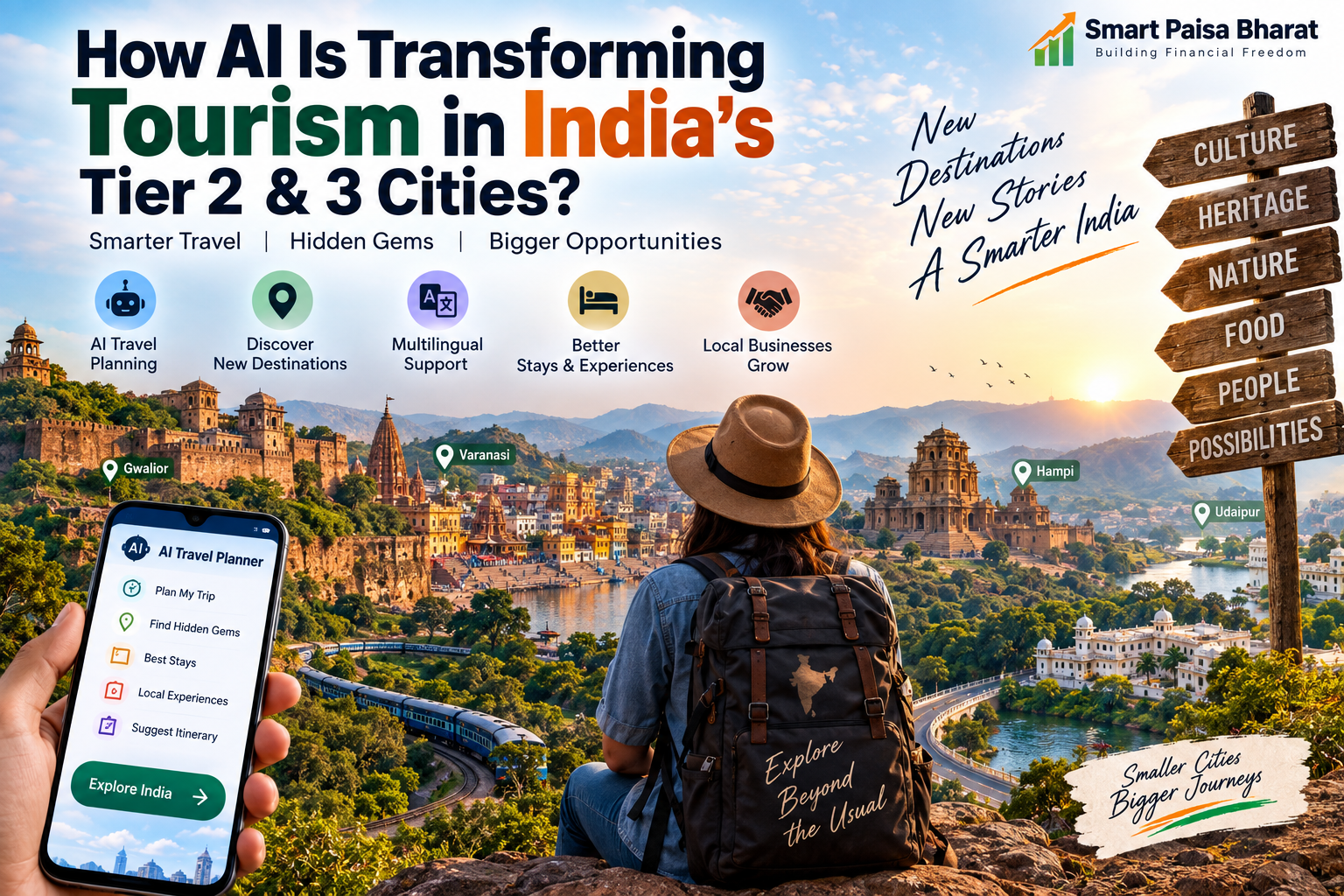
How Is AI Transforming Tourism in India’s Tier 2 & 3 Cities?
AI in Indian tourism is changing how travelers discover destinations, plan journeys and experience new places. India’s travel story is no longer being written only by Mumbai, Delhi, Bengaluru and other major metropolitan destinations. A new travel map is emerging across smaller cities, heritage towns, spiritual destinations, cultural centres and lesser-known regions.
At the same time, artificial intelligence is becoming part of the way people search for hotels, compare destinations, build itineraries, translate information and discover local experiences. For smaller Indian cities, this shift could create new ways to reach travelers who may never have encountered these destinations through traditional travel marketing.
The opportunity is not simply about putting more places on a travel map. It is about making local experiences easier to discover while giving tourism businesses better digital tools to connect with visitors.
Key Takeaway: Why AI Matters for Smaller Indian Cities
AI can help travelers find destinations that receive less online attention than India’s biggest tourist centres. It can also help hotels, homestays, restaurants, guides and tour operators create useful content, communicate with customers and organise travel information more efficiently.
But AI is not a replacement for the destination itself. A beautiful heritage site, memorable local meal or genuine cultural experience still depends on the people and communities behind it.
The real opportunity is to use technology to make those experiences easier to find, understand and access.
India’s Tourism Market Is Moving Beyond the Biggest Cities
India’s domestic tourism market has reached a massive scale. According to the Ministry of Tourism’s official data portal, India recorded 4,286.9 million domestic tourist visits in 2025, up 45.6% from 2024. 1
These numbers highlight the enormous size of India’s domestic travel economy. They also point to an opportunity beyond the country’s most established tourist destinations.
Smaller cities and towns can offer heritage, food, crafts, festivals, pilgrimage, nature, wellness and community-based experiences. Many of these places already have something travelers want. The challenge is often making that experience visible to the right audience.
This is where digital discovery and AI-powered recommendations could become increasingly important.
How AI Is Changing the Way Indians Plan Trips
Travel planning can involve a surprising amount of research. Travelers may compare hotels, read reviews, check maps, search for restaurants, understand local transport and build an itinerary before they even leave home.
AI tools can bring many of these activities into a more conversational experience.
Instead of searching for every detail separately, a traveler can describe what they want in ordinary language.
“Plan a three-day cultural trip with local food, heritage sites, comfortable accommodation and activities suitable for my family.”
An AI assistant can use that information to suggest a starting itinerary, organise ideas and identify areas that may need further research.
Travelers should still verify important details such as prices, opening hours, ticket availability, transport schedules and local restrictions before making bookings.
Why Tier 2 and Tier 3 Cities Could Benefit From AI
One of the biggest opportunities for smaller destinations is digital visibility.
A city may have a historic market, traditional craft community, regional cuisine or important cultural site without having the same online presence as a major tourist destination.
AI-powered search and recommendation systems can potentially connect specific traveler interests with destinations that might otherwise remain outside the traveler’s initial search.
For example, someone searching for a weekend focused on local food, heritage architecture or traditional crafts may be interested in a destination they had never previously considered.
This creates a potential digital bridge between traveler intent and local tourism supply.
AI Can Help Local Tourism Businesses Reach New Customers
Tourism is much larger than hotels and airlines. A destination depends on a wide network of smaller businesses, including guides, restaurants, homestays, photographers, taxi operators, artisans and local experience providers.
Many of these businesses may not have a dedicated marketing team. Modern AI tools can help with some everyday digital tasks without requiring a large technology budget.
- Creating website and social media content.
- Writing multilingual travel information.
- Preparing answers to common customer questions.
- Creating itinerary ideas for different traveler groups.
- Analysing customer reviews and feedback.
- Preparing seasonal promotional campaigns.
- Organising basic business information.
- Improving communication with potential visitors.
Used properly, these tools can reduce repetitive digital work and allow small tourism businesses to spend more time focusing on their customers.
Regional Languages Could Make AI-Powered Travel More Inclusive
India is a multilingual country, and travelers do not always search for information in English.
AI-powered translation and conversational systems can help travelers understand menus, directions, local information and destination descriptions in languages that are more comfortable for them.
The same technology can help tourism businesses communicate with a wider customer base.
For a small hotel or local tour operator, multilingual digital content can make it easier to explain services to visitors from different parts of India and from overseas.
From Heritage to Food: Every City Can Build Its Own Travel Story
India’s smaller destinations do not need to copy the tourism model of large metropolitan cities.
One city may have heritage architecture as its strongest attraction. Another may be known for pilgrimage, wildlife, regional food, handicrafts, festivals, wellness or nature.
AI can help businesses understand different traveler interests and create more targeted digital experiences around them.
A traveler interested in traditional crafts may respond to a completely different itinerary than someone looking for food tourism or a peaceful weekend escape.
Personalisation therefore becomes one of the most interesting aspects of AI-powered travel.
Digital Payments Are Strengthening the Travel Experience
The growth of India’s digital economy has also changed how travelers pay for everyday services.
Digital payments can make transactions more convenient for visitors while giving local businesses another way to participate in the formal digital economy.
When digital discovery, online booking, digital payments and AI-powered assistance work together, the overall travel journey can become easier for both visitors and businesses.
However, technology should complement reliable physical infrastructure, good connectivity and responsible destination management rather than be treated as a substitute for them.
Smart Tourism Is More Than Just Using Artificial Intelligence
It is tempting to describe every new tourism technology as a revolution, but successful destinations require more than an AI chatbot or automated recommendation engine.
Travelers still care about clean public spaces, reliable transportation, safety, accommodation quality, accurate information and genuine hospitality.
AI can improve discovery and communication, but it cannot manufacture an authentic cultural experience.
The strongest tourism strategies are therefore likely to combine digital tools with good infrastructure, local participation and responsible destination management.
The Hidden Risk: AI Can Get Travel Information Wrong
AI-generated travel recommendations should not automatically be treated as verified information.
AI systems can sometimes produce outdated opening hours, incorrect addresses, unavailable services or inaccurate descriptions.
This matters particularly when travelers are making financial commitments or planning time-sensitive journeys.
Before booking a hotel, buying a ticket or visiting a specific attraction, travelers should confirm important information through official websites or directly with the relevant service provider.
What AI Could Mean for Tourism Entrepreneurs
The rise of AI creates opportunities not only for large travel platforms but also for entrepreneurs in smaller Indian cities.
A local entrepreneur does not need to build a sophisticated artificial intelligence system to benefit from the technology.
A homestay owner could use AI to prepare multilingual guest information. A local guide could create better destination content. A restaurant could improve its digital presence. A tour operator could organise customised packages more efficiently.
These may appear to be small improvements individually, but together they can strengthen the digital tourism ecosystem of an entire destination.
Could AI Help Travelers Discover a Different India?
One of the most interesting possibilities is that AI could change the way travelers discover places.
Traditional travel marketing often concentrates attention on destinations that are already famous. AI-powered discovery can potentially introduce travelers to places based on their individual interests rather than only on broad popularity.
Someone interested in architecture may receive different suggestions from a traveler searching for regional cuisine. A family looking for a quiet weekend could receive different recommendations from a group interested in adventure activities.
This shift from destination-first discovery to interest-first discovery could create new opportunities for smaller tourism markets.
What the Next Phase of Indian Tourism May Look Like
India’s tourism industry is becoming increasingly digital, but the next phase may be more personalised rather than simply more automated.
Travelers will likely continue using a combination of search engines, maps, booking platforms, social media, travel websites and AI assistants when planning journeys.
For smaller Indian cities, this creates an opportunity to build stronger digital identities around what makes each destination unique.
Heritage, food, crafts, festivals, nature and local communities can all become part of a richer digital travel experience when technology is used responsibly.
Frequently Asked Questions About AI in Indian Tourism
How is AI transforming tourism in India?
AI is transforming tourism by helping travelers discover destinations, plan personalised trips, translate information, compare options and communicate with tourism businesses. It can also help businesses with content creation, customer support and digital marketing.
How can AI help Tier 2 and Tier 3 cities in India?
AI can help smaller destinations improve digital visibility, connect traveler interests with local experiences, create multilingual content and help tourism businesses communicate with potential visitors.
Can AI replace travel agents and local tour guides?
AI can automate some research and planning tasks, but local guides and travel professionals provide local knowledge, human judgment and personal interaction that automated systems cannot fully reproduce.
Is AI-generated travel information always accurate?
No. AI can sometimes provide outdated or incorrect information. Travelers should verify important details such as prices, schedules, availability, entry requirements and accommodation information with reliable sources.
Why are smaller Indian cities important for tourism?
Smaller cities and destinations can offer distinctive heritage, food, culture, nature, pilgrimage and local experiences while creating opportunities for tourism businesses and communities outside the largest metropolitan areas.
What is smart tourism?
Smart tourism refers to using digital technologies such as AI, data, mobile services, online platforms and connected systems to improve travel planning, visitor experiences, business operations and destination management.
Final Thoughts
The future of Indian tourism will not be shaped by technology alone. India’s greatest tourism strengths remain its people, culture, history, food, landscapes and extraordinary variety of experiences.
But AI can make those experiences easier to discover.
For Tier 2 and Tier 3 cities, that matters. A destination does not always need to become the next major tourist capital. It needs to reach the travelers who are genuinely interested in what it offers.
If AI can help make that connection faster and more personalised, smaller Indian destinations may have a powerful new digital channel for telling their stories.
The future of travel may not simply be about going farther. It may be about discovering more of what was already there.
Related Reading
Explore more Smart Paisa Bharat articles on artificial intelligence, digital tools, India’s digital economy and emerging technology trends.
Disclaimer: Travel information, prices, schedules, availability, entry requirements and local regulations can change. Always verify important travel details with official sources or the relevant service provider before making travel arrangements.