AI TRiSM: What It Is and Why Trust, Risk & Security Matter in AI
Building Trustworthy and Secure AI: Why AI TRiSM Matters
Artificial intelligence is moving from simple chatbots and recommendation engines into customer service, finance, healthcare, cybersecurity, software development, business operations and increasingly autonomous workflows.
But there is an important question behind every AI deployment: Can we trust the system to behave safely, securely and responsibly?
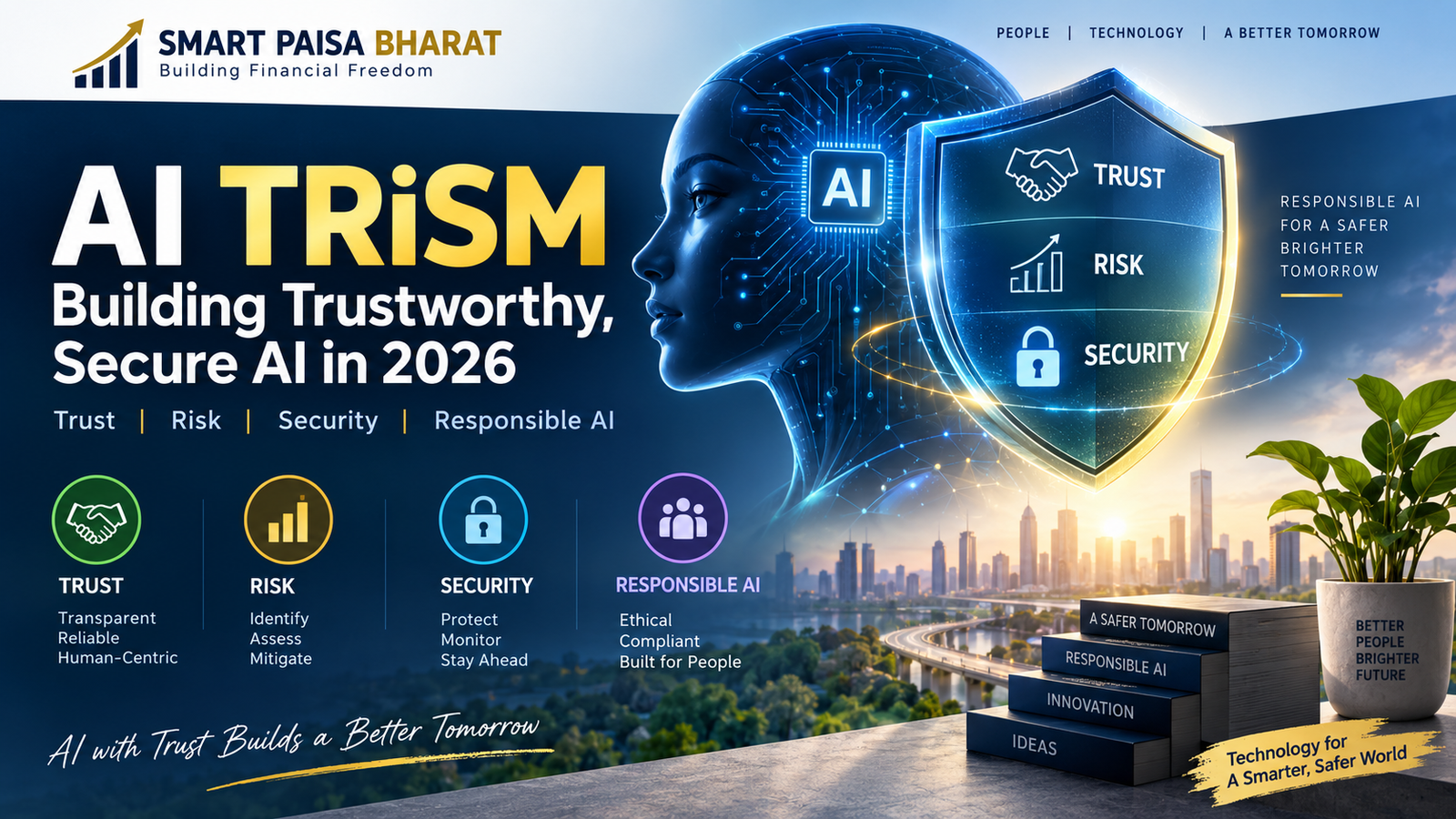
This is where AI TRiSM comes into the picture. Short for AI Trust, Risk and Security Management, AI TRiSM brings together the practices organizations need to manage AI reliability, security, privacy, governance and operational risk.
What Is AI TRiSM?
AI TRiSM stands for Artificial Intelligence Trust, Risk and Security Management. It focuses on making AI systems more dependable, secure, transparent and manageable as they become part of everyday business operations.
Traditional cybersecurity protects applications, networks and data. AI TRiSM goes a step further by considering risks that are specific to artificial intelligence, including unreliable outputs, biased decisions, data exposure, model manipulation, prompt attacks, excessive AI permissions and unexpected system behavior.
The idea is simple: an organization should not ask only whether an AI model works. It should also ask whether the model can be trusted, whether its risks are understood and whether adequate security controls exist around it.
Why AI TRiSM Matters More Than Ever
AI adoption is no longer limited to experimental projects. Businesses are connecting AI systems with internal databases, customer information, applications, cloud platforms and automated workflows.
That creates a different kind of technology challenge. A mistake made by a traditional application may affect one process. An AI system connected to multiple business functions can potentially spread an incorrect answer, expose sensitive information or trigger an inappropriate action much faster.
AI TRiSM provides a framework for thinking about these risks before they become expensive operational or security problems.
- Build confidence in AI-generated decisions and outputs.
- Identify AI-related risks before deployment.
- Protect models, prompts, data and connected systems.
- Improve transparency and accountability.
- Monitor AI systems after they go live.
- Support responsible AI governance and compliance.
The Three Pillars of AI TRiSM
AI TRiSM can be understood through three connected ideas: Trust, Risk and Security. They are different areas, but they work together.
1. Trust
Trust means understanding whether an AI system produces useful, reliable and explainable results. Organizations need visibility into how an AI system is being used and where human review is necessary.
Trust can involve accuracy testing, explainability, fairness checks, human oversight and continuous evaluation.
2. Risk
AI risk management means identifying what could go wrong and deciding how those risks should be controlled.
Examples include inaccurate outputs, privacy problems, biased outcomes, regulatory exposure, unreliable automation and excessive dependence on AI-generated information.
3. Security
AI security protects models, applications, data and connected systems from malicious or unintended activity.
Modern AI applications can face threats such as prompt injection, sensitive-information disclosure, data and model poisoning, supply-chain weaknesses and excessive AI agency.
AI TRiSM and Generative AI
Generative AI has made AI TRiSM particularly important because modern AI applications can produce text, images, software code, summaries and decisions at remarkable speed.
The same flexibility that makes generative AI useful can also create new security and reliability challenges.
For example, an AI assistant connected to company documents may accidentally reveal information it should not expose. An AI coding tool may generate insecure code. An autonomous workflow may interpret an instruction in an unexpected way.
This does not mean organizations should avoid AI. It means AI systems should be designed with appropriate controls, testing, monitoring and human oversight.
Common AI Risks Businesses Need to Understand
AI risks vary according to the technology and use case. However, several categories are becoming increasingly important.
Hallucinations and Incorrect Information
AI systems can produce convincing answers that are inaccurate or incomplete. Businesses therefore need validation processes for high-impact use cases.
Prompt Injection
Attackers may attempt to manipulate an AI system through specially crafted instructions or untrusted content. This becomes especially important when an AI system can access tools, files or external applications.
Sensitive Information Exposure
AI applications may process confidential business information, personal data or proprietary material. Access controls and data-handling policies are therefore essential.
Data and Model Poisoning
Poor-quality or deliberately manipulated data can affect AI systems during training, fine-tuning, retrieval or other stages of the AI lifecycle.
Excessive AI Agency
Giving an AI system too many permissions can increase the impact of an error or malicious instruction. AI agents should receive only the access and capabilities required for their intended tasks.
AI Supply-Chain Risk
AI applications may depend on external models, datasets, libraries, APIs and third-party services. Each dependency can introduce additional risk that organizations need to evaluate.
AI TRiSM vs Traditional Cybersecurity
AI TRiSM and cybersecurity are closely related, but they are not identical. Cybersecurity protects systems and information from threats, while AI TRiSM also considers whether an AI system behaves appropriately and can be trusted throughout its lifecycle.
| Traditional Cybersecurity | AI TRiSM |
|---|---|
| Protects networks and applications | Protects AI systems and their surrounding ecosystem |
| Focuses heavily on security threats | Combines trust, risk and security concerns |
| Monitors conventional system activity | Also evaluates AI behavior and outputs |
| Uses access and security controls | Adds AI-specific governance and validation controls |
| Protects data and infrastructure | Also considers model, prompt, training and AI lifecycle risks |
How Businesses Can Build an AI TRiSM Strategy
AI TRiSM does not have to begin with an expensive enterprise transformation. Businesses can start with practical controls and expand them as AI usage grows.
Step 1: Create an AI Inventory
Identify which AI tools, models, applications and agents are being used across the organization. Include both officially approved systems and AI tools employees may be using independently.
Step 2: Classify AI Use Cases by Risk
Not every AI application requires the same level of control. A marketing brainstorming assistant presents a different risk profile from an AI system involved in financial decisions, healthcare or critical operations.
Step 3: Control Data Access
AI systems should only receive the information they actually need. Apply authentication, authorization, data classification and appropriate access controls.
Step 4: Test AI Before Deployment
Test models and applications for accuracy, security weaknesses, inappropriate outputs, privacy issues and unexpected behavior before allowing them into production.
Step 5: Keep Humans in the Loop
Human review remains important when AI outputs can materially affect customers, employees, finances, safety or legal obligations.
Step 6: Monitor After Launch
AI governance should not end when an application goes live. Models, data, threats and user behavior can change. Continuous monitoring can help organizations detect problems earlier.
Step 7: Document Decisions
Keep records of important AI systems, their purpose, ownership, data sources, testing procedures, risk assessments and monitoring arrangements. Good documentation can make governance easier as AI adoption expands.
AI TRiSM and AI Governance
AI governance defines how an organization manages the responsible use of artificial intelligence. AI TRiSM can provide the operational controls that help turn governance principles into day-to-day practices.
In other words, a policy may say that sensitive information must be protected, while AI TRiSM processes can help determine how that protection is implemented, tested and monitored.
This distinction becomes increasingly important as organizations move from isolated AI experiments toward AI systems that operate continuously inside business processes.
Why AI TRiSM Is Becoming an Important Business Capability
The next stage of AI adoption is not simply about deploying larger models. It is about connecting AI to real workflows and allowing systems to perform increasingly complex tasks.
That creates a need for stronger visibility and control. Companies need to know what their AI systems can access, what decisions they influence and what happens when something goes wrong.
AI TRiSM therefore sits at the intersection of technology, cybersecurity, governance, compliance and business operations.
AI TRiSM in Finance, Healthcare and Other Industries
Financial Services
Banks, fintech companies and investment businesses can use AI for fraud detection, customer support, document analysis and risk assessment. Because financial decisions can have significant consequences, AI systems may require stronger validation, auditability and human oversight.
Healthcare
Healthcare AI can assist with research, administration, imaging and clinical workflows. Privacy, reliability, safety and human review become particularly important when AI outputs influence patient-related decisions.
Retail and E-Commerce
Retailers can use AI for recommendations, customer service, demand forecasting and inventory management. AI TRiSM can help organizations control customer data, monitor AI outputs and manage third-party AI services.
Technology and Software
Developers increasingly use AI for coding, testing and documentation. Security reviews remain important because AI-generated code can contain errors or vulnerabilities.
Enterprise Operations
AI agents may eventually coordinate multiple tasks across business systems. As their level of autonomy increases, permission management, monitoring and human escalation become increasingly important.
AI TRiSM and the Future of AI Agents
AI agents represent an important shift from AI that simply answers questions to AI that can plan and perform tasks using connected tools.
That creates a new governance question: What should an AI agent be allowed to do without human approval?
A sensible AI TRiSM strategy can address this through permission boundaries, identity controls, activity monitoring, approval workflows, testing and clear escalation rules.
The more autonomy an AI system receives, the more important it becomes to understand its capabilities and constrain actions that could create significant consequences.
AI TRiSM Checklist for Businesses
- Do we know where AI is being used?
- Who owns each important AI system?
- What information can the system access?
- What happens if the AI produces an incorrect result?
- Have security and privacy risks been tested?
- Can important AI decisions be reviewed by humans?
- Are AI-generated outputs monitored?
- Are third-party AI models and services evaluated?
- Are high-risk AI use cases documented?
- Do we have a process for responding to AI incidents?
What Is the Difference Between AI TRiSM and Responsible AI?
Responsible AI is a broad concept covering the responsible design, development and use of artificial intelligence. It can include fairness, transparency, accountability, privacy, safety and human oversight.
AI TRiSM focuses more specifically on the practical management of trust, risk and security around AI systems.
The two approaches can work together. Responsible AI can establish the principles an organization wants to follow, while AI TRiSM can help put controls and monitoring around those principles.
Frequently Asked Questions About AI TRiSM
What does AI TRiSM stand for?
AI TRiSM stands for Artificial Intelligence Trust, Risk and Security Management. It focuses on managing trust, risks and security throughout the AI lifecycle.
Why is AI TRiSM important?
AI TRiSM helps organizations identify and manage risks involving AI reliability, security, privacy, governance and system behavior.
Is AI TRiSM only for large companies?
No. Small businesses can also apply AI TRiSM principles. Basic steps such as controlling access to AI tools, protecting confidential information, testing outputs and maintaining human oversight can be useful at any scale.
How does AI TRiSM improve AI security?
It encourages organizations to consider AI-specific threats such as prompt injection, sensitive-information disclosure, model and data risks, excessive permissions and third-party dependencies.
Does AI TRiSM replace cybersecurity?
No. AI TRiSM complements cybersecurity. It adds AI-specific trust, risk and governance considerations to broader security practices.
Is AI TRiSM relevant to generative AI?
Yes. Generative AI introduces risks involving inaccurate outputs, confidential information, prompt manipulation, model dependencies and automated actions, making AI risk and security controls increasingly important.
What is the first step toward AI TRiSM?
Start by creating an inventory of the AI systems and tools being used. Then classify their risks, identify the information and systems they can access, and establish appropriate testing, monitoring and oversight.
Final Thoughts
Artificial intelligence is becoming more capable, but capability alone does not create trust.
Businesses need to understand how their AI systems behave, what information they can access, what could go wrong and who is responsible when something does not go as expected.
AI TRiSM provides a practical way to bring those questions together. By combining trust, risk management and security, organizations can create stronger foundations for responsible AI adoption.
The future of AI will not be defined only by how intelligent systems become. It will also depend on how effectively people and organizations learn to manage them.